Pursuing an artistic life requires dedication and determination, against sometimes incredible odds. And artists who are parents often struggle with a lack of support and sometimes face outright discrimination. The New Harmony Project believes firmly in supporting parent artists, but not all organizations have the same mindset. Is it possible to be a parent and an artist? How do parent artists make it work? How can the industry better support them? What have they done to make it all possible?
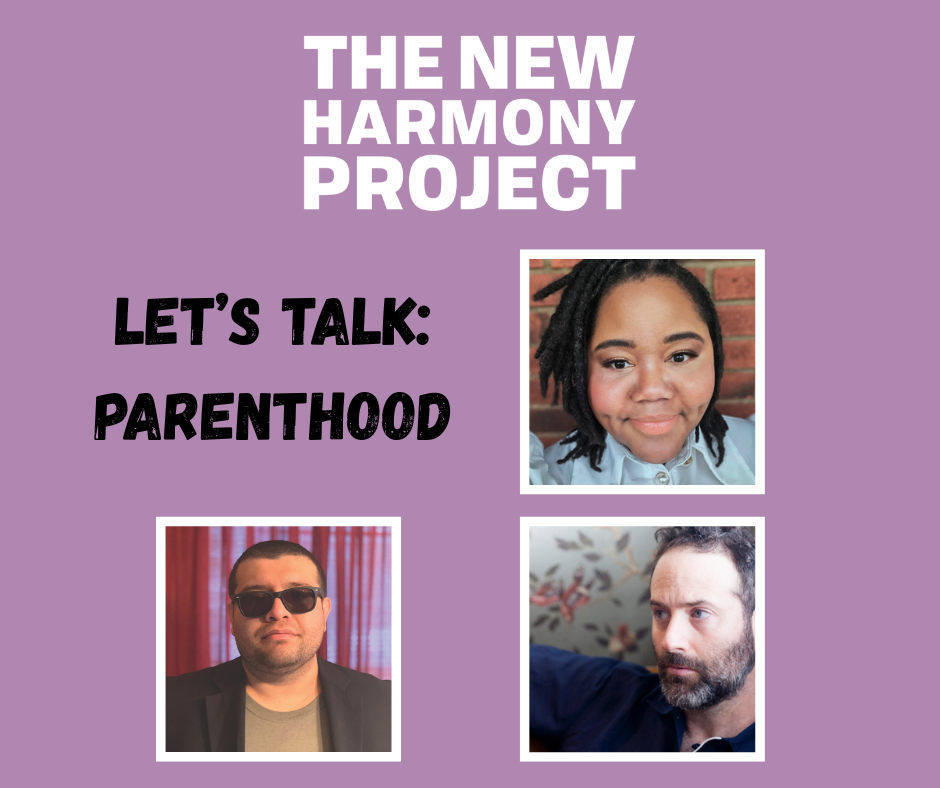
Phaedra Michelle Scott, NHP’s Resident Dramaturg, moderated this conversation with Shavonne Coleman, Franky D. Gonzalez, and Dan O’Brien, along with NHP’s Executive Artistic Director, Jenni Werner. You can read bios for our participants here.
PHAEDRA: What's the best part about being a parent artist? How do you balance parenthood and your creative pursuits?
“It keeps me playful, it keeps me exploring, it keeps me there.”
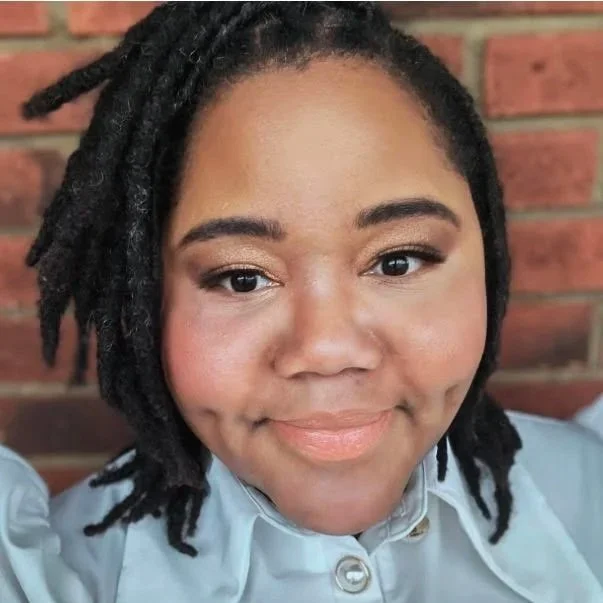
SHAVONNE: I think one of the things about being a parent artist is it keeps me playful. The world and society teaches us to stop being playful and stop exploring and so it's a reminder for me. Sometimes my kids will say or do something where I'm like, ‘oh yeah, I should let that go.’ I could be like, ‘well, that's nonsensical, don't do that.’ But as an artist, it should be more like, ‘yup, why can't I do that more, right? Why can't I live in that fantasy world a little more?’ So I think it is a benefit because for me it keeps me playful, it keeps me exploring, it keeps me there.
How do I balance? I probably don't very well. I think I do a good job of creating boundaries so that I am being the parent that I want to be, and showing up in that way. I don't think I get to do creating as much as I would like to, or as free-form as I would like to, and I probably don't do the things just for me that are outside of creating or being a parent nowhere near enough.
What am I not balancing really well? It's the really specific Shavonne things that are not artist and not parent.
Because we have all these facets of who we are, and I would say that's where the balancing is struggling when it does struggle.
So I would like to be more balanced, but it is something that's constantly on my mind.
“I like to think that I take advantage of the time I have now to be creative, maybe more than I would have done when I had more free time before becoming a father. ”
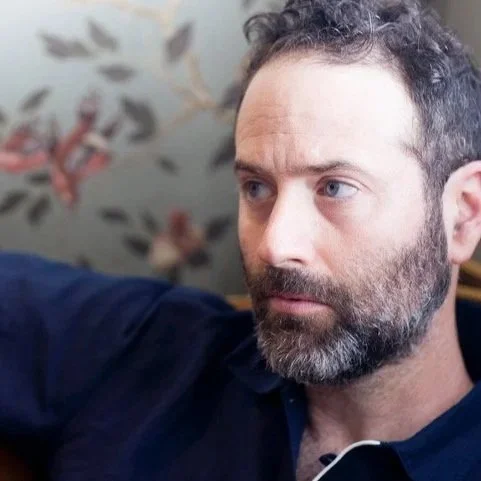
DAN: I was just thinking about this today in anticipation of this conversation. For me it's similar to what Shavonne was saying. I really am grateful that I'm able to model for my daughter a way to be an adult. That is, living a life guided by creativity and passion that’s often motivated in socio-political terms.
Being able to share a vocation with your child feels very special to me. Rather than just being a parent who has a job that maybe they kind of like and kind of hate, but it pays the bills, or whatever, you know?
There are a lot of challenges that come with being a playwright, or any kind of artist. But to be able to show my daughter that this is a way to move through the world, and not just in terms of creativity, but also in terms of being helpful or useful to people.
And I don't think of my art in terms of being helpful with a capital “H” helpful. But in terms of sharing stories and witnessing each other's stories, and teaching the value of empathy. I feel really lucky to be able to do that. My wife's an actor, and she works in TV and film. So there's a lot of similarities with her career and what we're able to model for our daughter.
And then the challenges are similar to what Shavonne was saying. You don't have 100% freedom, or not 100%, but the relative freedom you had before children in terms of the amount of hours you had, or which hours you can work, you know–it's more limited now, as a parent, when you can practice your art.
I like to think that I take advantage of the time I have now to be creative, maybe more than I would have done when I had more free time before becoming a father.
Then there are certain challenges that I'm sure we'll talk about, challenges specific to being a playwright. Similar to my wife's challenges in TV and film, in terms of the time away from home, nurturing your career, and having to figure out how to do that while being a responsible parent.
So, Franky, take it away.
“...my creative process is informed entirely by the fact that I look at my career now as an effort towards leaving as many stories for him as possible, so that he can continue this dialogue with me in a way that I never had with my father, who was not very present in my life.”
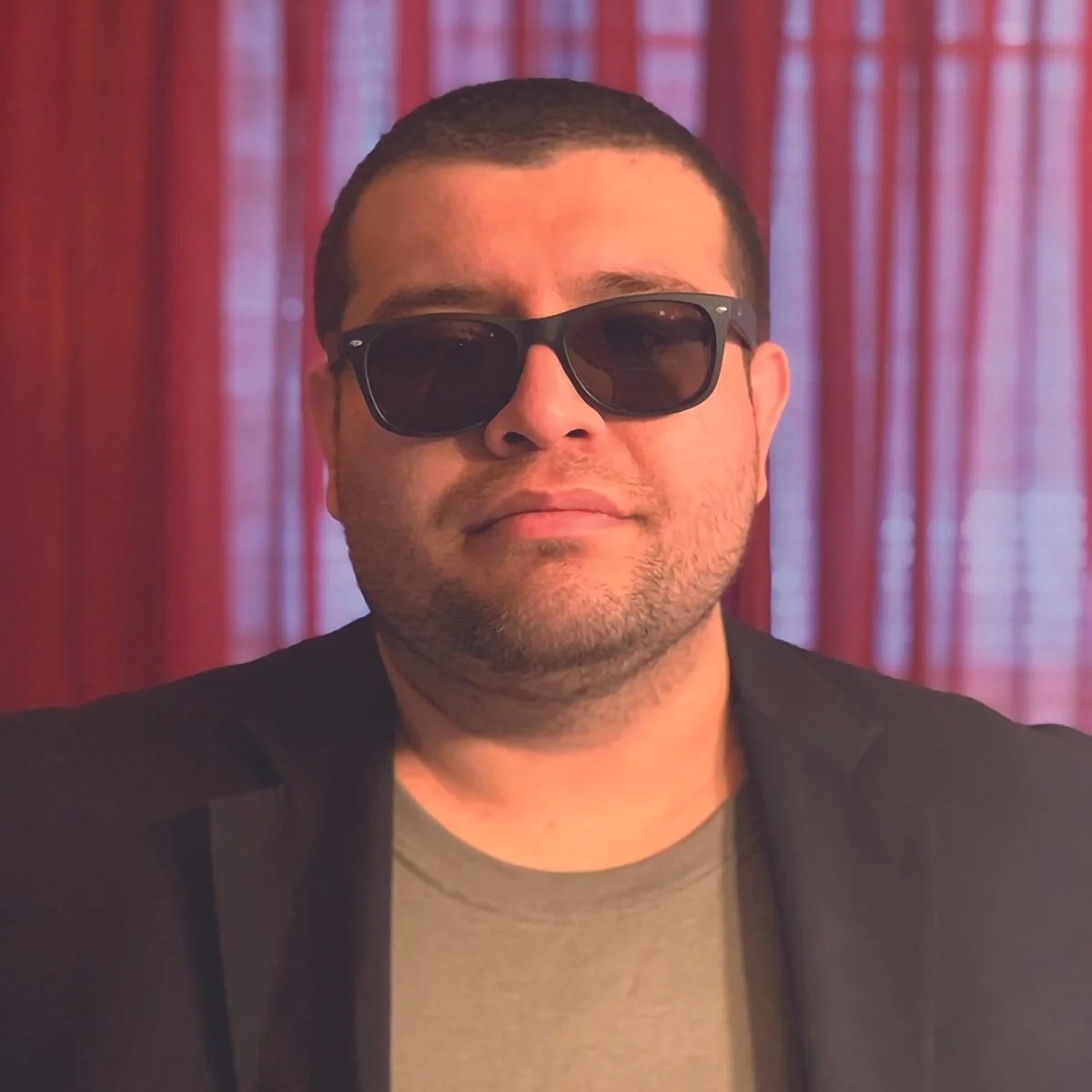
FRANKY: The best part of being a parent artist is how much my child reminds me that I ain't nothing. It’s not so serious, ever. He is not impressed with me. He is not at all taken by anything that I do. I could write as many plays, pilots, screenplays as I want. They could end up on whatever streaming service, and it's still, ‘okay, fine.’
That's cool. And if I'm in the middle of trying to hit a deadline, that's not important. The water park is important. The trampoline park is important. And this reminder that I am so small before the desires and whims of this child that I sired.
And it is one of those things where it helps me not buy my own hype, and I find that to be a very gratifying thing. I always worry, I don't want to become too full of myself as an artist and a child will set you straight real quickly when it comes to how unimpressed they are, and how uncool I am because I could win a Jeff in Chicago and my son was like, ‘yeah, but you didn't write PJ Masks. So what does it matter? It's like, these things are so small. These are trivial matters, father.’ That's really for me, that's a wonderful thing.
I think the other question was how it [parenthood] informs our creative process. I think that it's really funny. There is the saying or adage where if you have a child your career is going to get much more difficult. And to some degree, yes, it’s true. I’m not going to say that that’s not the case. Certain doors closed, certain considerations had to be made in my own journey. If it was just me and my wife, it’d be something different. You know, we have other matters to consider like school, support network, all that, whatever it may be.
I did not get my first yes until after I became a father. It was years and years of rejection. It was years and years of, sorry, try again next year, or overwhelming number of submissions this year.
It wasn't until I had a child. I'm sitting there at 24, broke, not able to feed him his formula that I figure out: oh, I think that this is the only person I ever want to write to for the rest of my life. And now because I only usually ever center my plays around writing something to my child, for some odd reason, it clicks with people.
And so now my entire creative process has formed this kind of discipline around, okay, what am I trying to tell my child with this piece now?
And it helps with the writer's block to always remind myself, ‘remember, you're trying to talk about your crazy grandfather who did, you know, X, Y, and Z, and let him have that story.’
And so for me, my creative process is informed entirely by the fact that I look at my career now as an effort towards leaving as many stories for him as possible, so that he can continue this dialogue with me in a way that I never had with my father, who was not very present in my life.
So everything is informed by fatherhood in terms of, like, my creative output in that sense.
PHAEDRA: I really love hearing all of that, especially as the only non-parent in this conversation. So I'd love to move on to the next question. Dan, you started talking about this with your answer, which is, what are some ways the industry can support parent artists?
DAN: The glib, immediate answer is just pay us more. But of course, that's a complicated issue.
“I stopped applying to many development programs because I didn’t want to spend a month away from my child.”
We moved to L.A. because at a certain point, Jessica and I, my wife and I, we lived in New York, and worked there for many years. She was doing comedy improv, which pays even less than playwriting. And we realized if we wanted to have at least a child then she needed to work in TV and film. Maybe I did too. So we moved to L.A. So, you know, in some ways, it is just a huge challenge that playwriting pays so poorly.
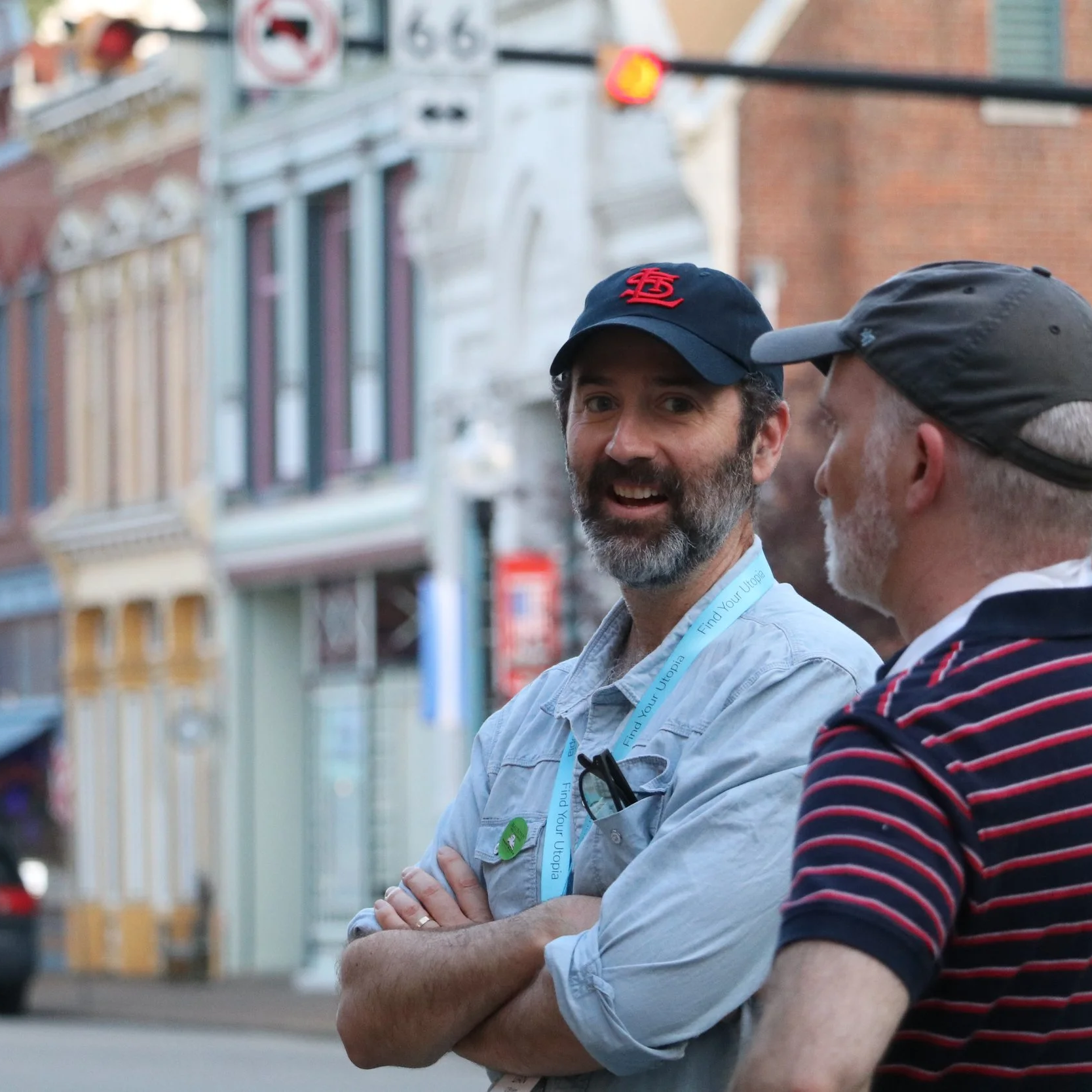
I think what New Harmony has done so well for a while now is to invite families and to support families with food and lodging and childcare, and some financial support, too. You know, that's huge. At a certain point, I stopped applying to many development programs because I didn't want to spend a month away from my child.
Even when I'm working on a show out of town now that I'm a parent–when I was younger I probably would’ve spent the entire rehearsal process working on the play, if the director would have me, if the theater would have me. Whereas now, you know, I want to be helpful in the rehearsal process, but I need to find a balance where I'm not far away from my child for too long. Another part of my story is that my wife and I are cancer survivors. So, you know, post-cancer, we're even more aware of the value of time, and time spent with our daughter and as a family.
So, yeah, I think more theaters and organizations finding a way to support playwrights by integrating their families into the developmental and rehearsal processes–that would be enormously helpful.
FRANKY: You know that definitely speaks to me as well. I vibe very much with what Dan is saying in terms of creating more welcoming spaces. It is where the great divide between fathers and mothers are very, very stark.
There is a lot of stigma and shame that surrounds being a mother artist. And this like, ‘Oh your career is gonna have to take a back burner now to your art.’
Whereas it is something for me where it's like, ‘Oh, look. He's so ambitious,’ versus I'm being neglectful of my child by choosing to indulge in my career. That really is something we need to shift the paradigm on. One of the things that I saw with a single mother, it was not possible for her to be able to pursue the things that she had wanted, and whenever she would try to have something for herself, not just from society, but from her own family, from her own peers, there would just be this like, ‘Why are you neglecting your children right now? You should be at home’. There's just this like, sense that I think for mother identifying parents, that's a tough thing.
It's a little easier for a guy where it's just like, you know, because mom's at home taking care of the kid, or grandma, or someone like that. So I find that it is one of those things that our industry would do well to try as best as possible to watch that kind of stigma set in and to know that just because someone is present and engaged and tries to prioritize the work at that moment does not make them a neglectful parent.
We don't shame a parent for not necessarily answering the phone because they're in the boardroom or they're at the corporate job and they can't have their phones out.
Same thing happens here. Just because we are playing, whether it's in acting or whether we're creating worlds as playwrights does not necessarily mean that we are any less of a parent or that we are neglectful of them, but there are realities that have to be contended with, and I particularly notice that it's women that get the brunt of that.
I get to be ambitious. A woman is selfish. That breaks my heart, and I would love to see that change.
Money would always be great, too, but I think that the kind of leeway that I'm given, I wish that were given to my mom when she was coming through herself, when she had to put things aside because just society's stigmas are still there, and we're still living in the fallout of that, to this day, I think.
SHAVONNE: Franky almost made me cry, but he didn't get me.
FRANKY: Almost, almost. We'll get you!
SHAVONNE: There’s still time that’s true. So, I am a single mother, and it is one of those things where... Oh, where do I even start?
“So if you say, I want to support families, but there’s no budget line for supporting families, that’s not actually something that’s on your list of things to do.”
Leading up to being part of New Harmony Project, I had been involved in different things where people are like, families are welcome, and then when your kids show up with you, and you don't have any place to put them, because I'm single, you know, there's like the side eye when things are happening. People look at you like why are your kids being kids right now?
I'm very lucky to have a super-duper supportive mom who typically is able, because in a lot of cases people aren't, but she has been able to travel with me in some cases, but even, I remember when I found out I was going to New Harmony Project and I could bring my kids, I was so used to the mindset of, okay, so instead of flying there, I'm going to drive there, from Texas because I can't pay for my kids to fly. My mom will get there, people will see my kids at the welcome and then I'll shoo them away like I typically do so they're not in the way.
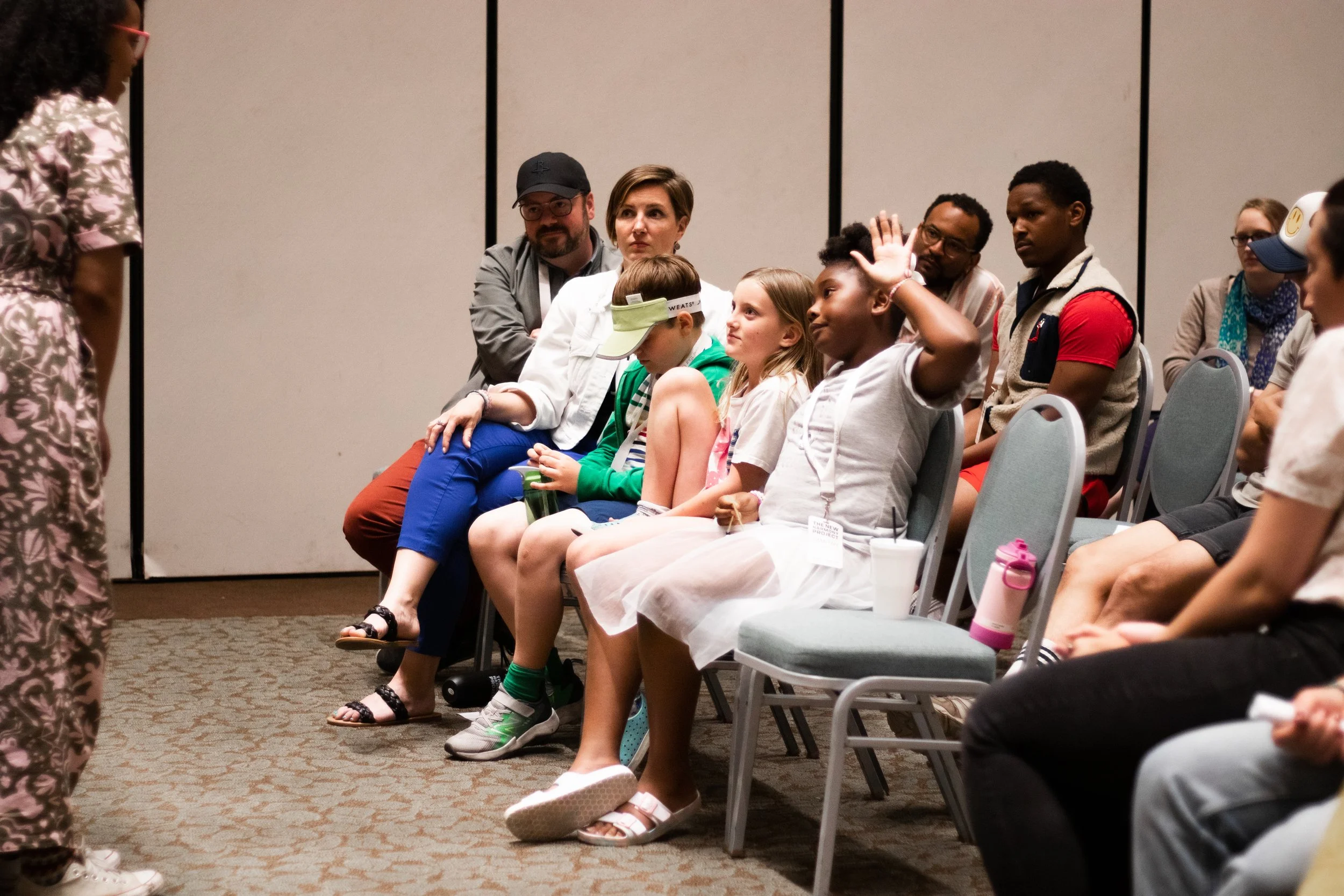
I just remember a couple weeks before [New Harmony Project]I was talking to the company manger, Blake Elliott, solidifying plans and he seemed confused, next thing I knew the team, Blake, David Hudson and Lori Wolter Hudson notified me, –no you'll all fly here and you'll all stay here and when we got there my kids had badges that said they were like “Director of Fun” or something like that and my kids loved it. So it's the little things, just the idea that they belong to the point that they have official badges, you have a place in a space. So it really is confronting that stigma because as much as we say ‘oh yes families are welcome, oh yeah come and bring your families’ in most places and spaces that doesn't ring true.
It's particularly important for me because I don't have that situation where ‘they're here and now they can go with my partner’ because I don't have a partner so I think organizations have to think about that budget line. I always say, if you're talking about change, you’ve got to have a budget line for it. If you look at your budget and there's no budget line for it, then you don't actually want that thing, right?
So if you say, I want to support families, but there's no budget line for supporting families, that's not actually something that's on your list of things to do.
And then once you get to that point, whatever that looks like, yes you’ve done that step, but what does it look like to confront the stigma of this barrier, what in our space already traditionally works against someone having their children in the space? And what does that look like for different sorts of families? What does that look like for partner families? But what does that look like for partner families where their partner is not an artist and not going to be in the space? What does it look like for partner families where they both are artists and both will be doing something at the same time? What does it look like with people who aren't partnered, right? And different age ranges, right? Because, sure, my 11, 12, 13, 14, 15 year old can come and sit in the corner and be fine, or involved in what's going on and love it, but my 3, 4, 5 year old is gonna have to move every 15 minutes. So what does that look like? And so I think a lot of times the work isn't done to consider those things.
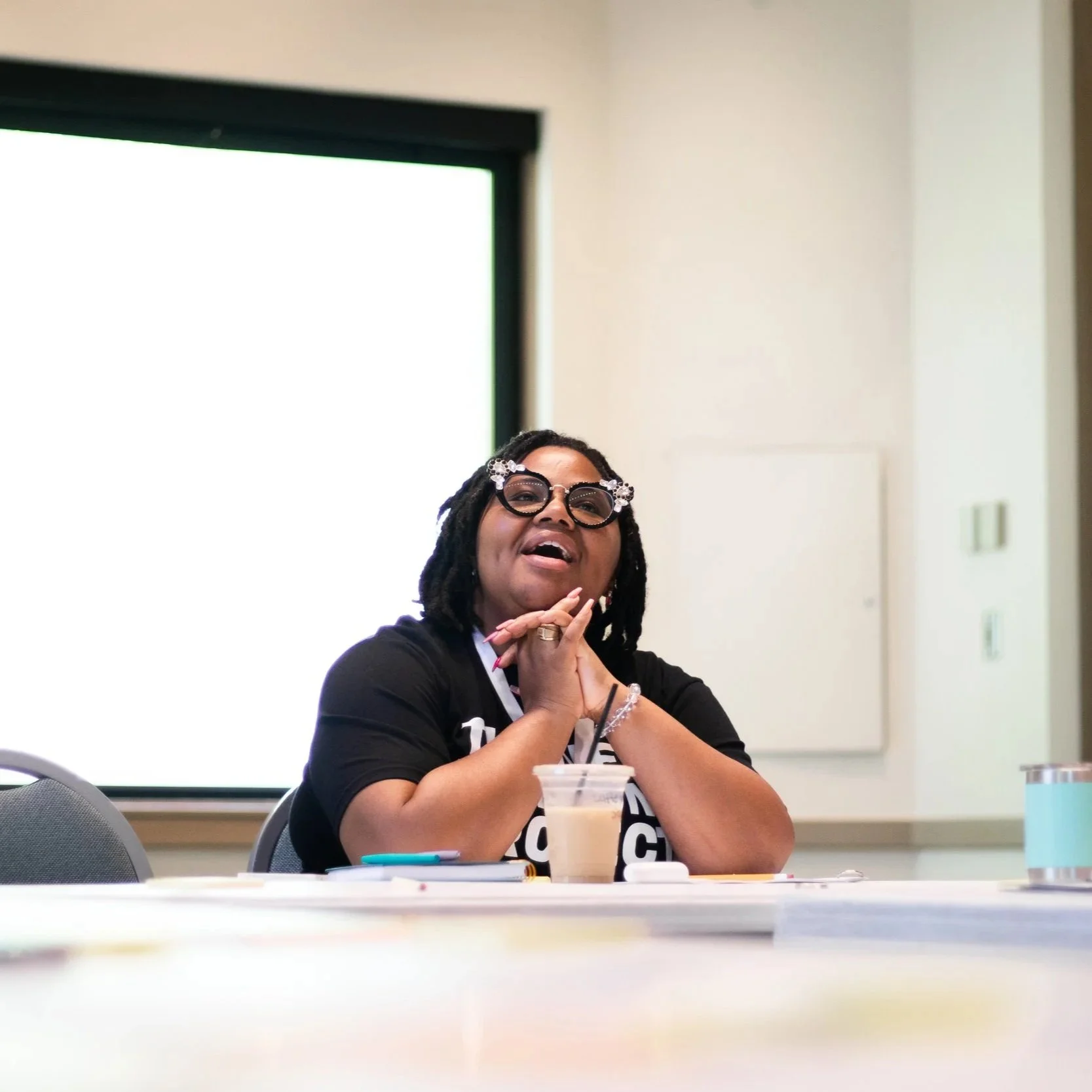
It becomes very difficult to be a parent and an artist in that space. I always say New Harmony Project is the only place that I've been where I felt like I could simultaneously be a parent and artist.
Typically, I have to fracture myself and show up in those fractured pieces in order to work, right? And so, yeah, how do we invite people to come into the space and not fracture themselves, not break themselves apart before they can work?
FRANKY: I totally agree there. I think one of the big things that I've noticed is that when people say they're welcoming to families, when the infrastructure's not there to house children. My child, when he was two, he saw the socket and he thought, my fork can go in here, you know, and it's like, thank goodness I found speed to catch him, but those kinds of things are there.
I noticed that while things are well-meaning, it also comes from a place of not quite knowing what it is to deal with kids. You want to have the kind of space for children, but it's like, I don't think you know what that means, especially when you run into administrators who have either declined to have children or that might be something that's on the horizon, but not at this moment.
And it's just like, no, this tiny, confined office is not enough for a child. They will break out, they will cause havoc and you know it's just what they do. You give them something to break out of, they will break out. So it is that thing where I think that there's a lot of well meaning behind it, behind this trying to be welcoming.
But the thing is, it's also misplaced, misinformed, it's coming from a place of not understanding what the actual logistics are, which is why I've appreciated the New Harmony Project in welcoming me and my family for the parent artist residency. It made the difference and it showed me that this is possible in theater. It is actually something that can be done.
But the thing is, is that it requires the monumental effort and will to do it. And that's something that we are still trying to find ways through to get it through to these organizations that these things are imperative or else we are going to risk losing important voices who are going to enrich the American theater.
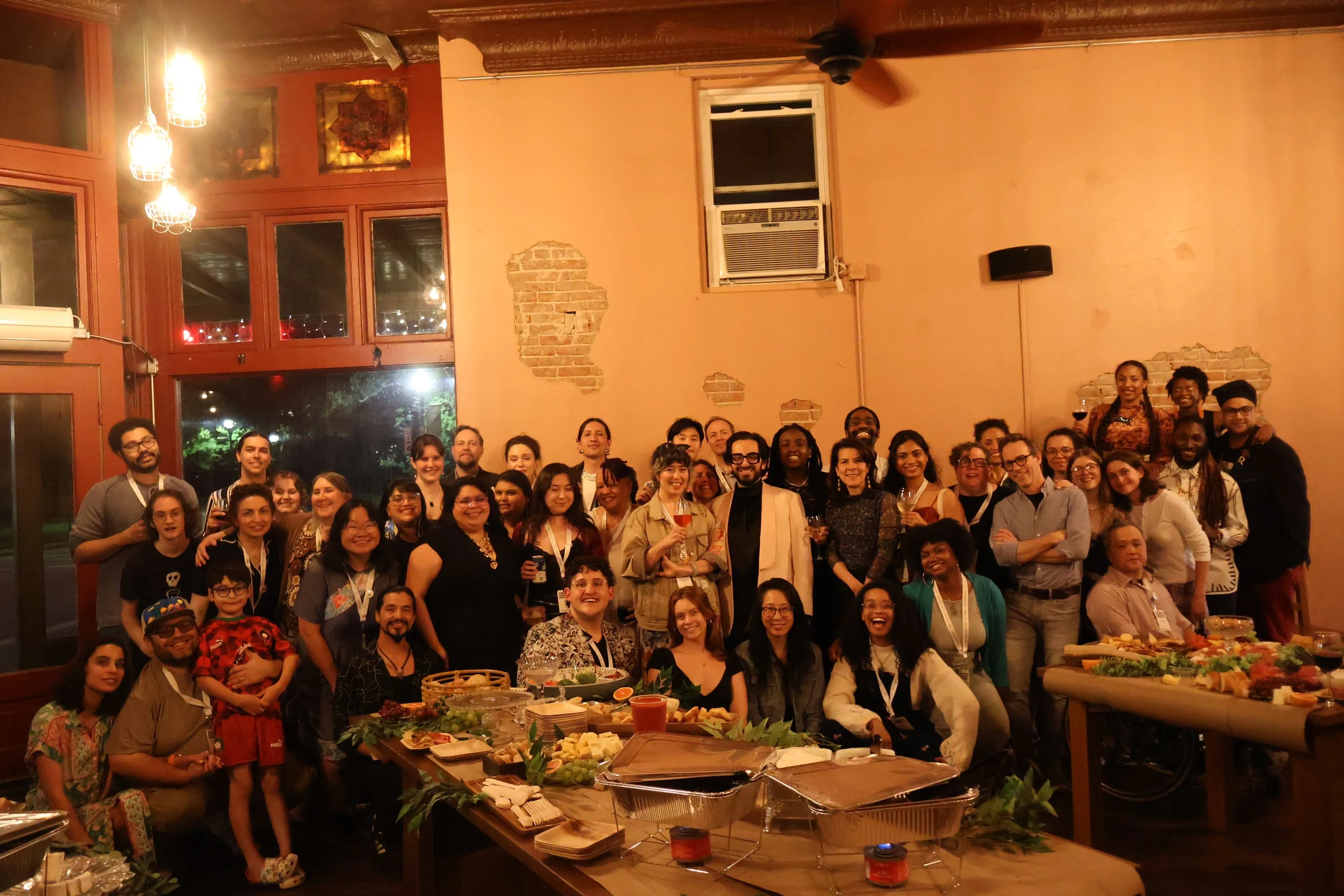
If we are only championing voices that do not have themselves children, how can you write a family drama effectively if you're supposed to write what you know?
We risk a cheapening in many ways. We become bereft as an art form without being able to find ways to include these voices that can provide these experiences that give meaning to these scripts.
JENNI: It's so interesting to hear you all talk and it makes me angry about the lack of support that's out there. My son is 20 and my stepson is 35. So my entire professional career I've had kids.
I think things have changed over the years, but NHP has always been such a family-friendly space, so I don't know if I'm seeing actual change in the industry, or if I just work in a place with a more holistic approach to supporting parent artists.
I'll say also that when my son was six, I took him to a rehearsal and got side-eye and a lot of shade from a director who now takes their child to rehearsal and is applauded for doing such a thing. That director is a man, I am a woman, so there’s the gender part of the conversation, you know.
I'm curious if you think there have been changes, positive changes that have happened in the industry.
FRANKY: I feel there has been, please, Dan.
DAN: No, no, you sound like you're giving a positive response, so why don't you go first?
FRANKY: I feel there has been progress being made, but there's still a lot of work to be done. We are still at the stage where we're laying foundation. And at the very least, there's an acknowledgement that infrastructure needs to be built. At the very minimum, we've crossed that territory now.
I think going back to that whole thing, this is where being a dad is much more different than being a mom because I actually get applauded for bringing my kid around to rehearsal and everything.
And it's just like, wow, a present father who's including his child in his career and everything. Add to that the other stigma of also being a Latin father, a Latino father who is like, oh, wow, a present Latin dad in his son’s life.
And going back to what I said earlier, that same stigma against a woman bringing their child, and it's like, how unprofessional, how this, how that, that is still lingering, I think, in a way that should not be tolerated at all. But at the very least, the positive change is that there's an acknowledgement, we need to build the infrastructure for this.
“I would also say that not supporting artist families limits the types of stories that will be told by excluding people who don’t have money, but it also encourages the types of stories that come from people with trust funds and that sort of mentality.”
DAN: That's good to hear. I was going to give more of a type of answer in the sense that my plays tend to be plays that I wouldn't want my daughter to be present for. They're too adult, in some fashion, they're political, they're dark, whatever. She's been too young to be actively in the room for rehearsals or performances, so that's why so many of my thoughts have to do more with financial support.
The question does lead me to think about something that's connected to a personal crusade of mine, which is artist housing in general. I've had so many experiences in artist housing at theaters that were pretty abysmal, pretty depressing or unsafe, and that was just me residing there alone. I've never elected to bring my daughter somewhere where she would stay in artist housing for a production of a play, for example, at a regional theater or something. One response for how the industry could improve is connected to that idea of valuing and respecting artists in general.
When I started out in my twenties, I really did accept it, this starving-artist idea of being a playwright, and that I should just feel lucky to have been selected. But I look back on some of the places I’ve stayed for weeks or months at a time, and it wasn't right. I certainly wouldn't want to expose my daughter to a lot of those living situations.
I would also say that not supporting artist families limits the types of stories that will be told by excluding people who don't have money, but it also encourages the types of stories that come from people with trust funds and that sort of mentality. That's why it's important not just for the stories we're losing–although that's probably more important–but it's also that we're reinforcing the same types of stories from the same types of people over and over again, limiting the diversity of economic background.
FRANKY: It’s such a big thing. I've run into so many scripts where it's just like– wow this does not resemble any latin impoverished struggle that I have ever witnessed myself. This doesn't resemble anything from my neighbors from upstairs in Queens, you know the Puerto Ricans upstairs, it's like “no, this this feels like it's coming from someone who is looking at it almost anthropologically” and it's like “no that that's incorrect.”
By not having that kind of ability to be able to support artists of different economic backgrounds, especially when they have children, we we limit ourselves, the theater limits itself by not being able to include artists for whom children are a consideration, especially if they don't come from a well-to-do background where they have an au pair or something like that that'll take care of the the kid while while while they're at work.
“I have a lot of half-written dark plays in my Google drafts that I can’t finish because I also only get to write if someone is going to pay me or give me an opportunity around it because I have to, unfortunately, I have to pretty much do artistic things that pay.”
SHAVONNE: What Dan said made me think of something because being a parent who's a solo parent, I typically, well, number one, I joke and I say I'm a baby playwright. Even though I've been writing plays for probably 20 years.
I'm an applied theater person, so I wrote a lot of plays for process versus product, and I've only recently started writing plays for product purposes with the idea that it may go out into the world for a production that I am no way involved in. So I have to think of productions versus I'm working on this project and writing a play for this specific moment or group.
It’s interesting because what Dan said about, I wouldn't want my daughter to go because it's dark, right? I have a lot of half-written dark plays in my Google drafts that I can't finish because I also only get to write if someone is going to pay me or give me an opportunity around it because I have to, unfortunately, I have to pretty much do artistic things that pay. Otherwise, I don't really have the time or ability to do so as a solo parent.
I typically end up doing a lot of TYA [Theater for Young Audiences] and I love TYA and I think I'll continue doing TYA, but right now it's necessary because that's who's going to pay me, and that's the folks who typically tend to allow you, at some level to bring your family. I can take them, I direct for youth theater and I know that I could take my kids there if I need to, and I do.
I think it's important for organizations to think even if my children aren't coming to see the show because it's dark or it's too old or it's too mature, what does it look like for them still to be able to come with me and be there for me? To be there a couple weeks or three weeks or four weeks, because it does really limit what I'm going to focus on as a writer.
Once I'm 50 and my son's in high school and my daughter's in college, maybe I'll get to write those plays. I would hope that I don't have to wait that long, right? I hope more people get the opportunity to not have to wait to write those plays. That came up for me because it limits people from different socio-economic backgrounds, it limits people who are caretakers, but it also just limits who gets chances to write, what we write, or what we feel like we can sort of stretch and get a chance to do.
PHAEDRA: What are some things that you wish you knew about the artistic life and parenthood before you became parents?
SHAVONNE: I wish I knew that those two things are not mutually exclusive. People try to make you feel like it is. They actually belong together, if you want children. Obviously, you don’t want children, no. But if you’re a person who is like ‘I would like children one day’.
I think we are taught from a very early age, whenever you’ve decided to become an artist, you probably were already getting these things planted into your brain that a family is a bad idea. I started off as an actor, so maybe it was more because of that. But, in general, very early, you start to get that–that’s a bad idea, don’t do that, hold off, or don’t ever do it, right?
I think just the idea that they actually work together quite well, and like Franky said, he got his first yes after he became a dad. I feel like lots of things that have happened that have made me feel like I'm flourishing as an artist was only after I had my oldest.
So my daughter is my biological daughter, my son is adopted. And even when I adopted him, I remember having conversations with other artists. They didn't say it to my face, but I could tell by their face that they were like, are you mad? Like why? You're already a single mom, why would you then adopt a child? You're trying to be an artist, you can just see it in their face. They're like, that's a terrible idea. But to me it is what makes me a great artist on all the different levels of being an artist.
So I think that's it. It's like going into it, sort of getting rid of and washing away that idea that they don’t go together. I think they go together so beautifully once you get into it and figure it out and figure out the flow.
DAN: Yeah, I agree. I don’t know if this was quite the question, but I do wish I didn’t wait so long. My wife and I had this idea that we had to be financially set and secure before having a child. When, of course, that’s never gonna happen, probably, in the arts.
I look back on how my life has grown and how I feel I’ve grown emotionally and psychologically since becoming a parent, and yeah I wish I had started earlier. But I would like to echo what Shavonne said. Obviously everyone has their own story, so this isn’t an advocacy for becoming parents. But personally speaking, I always felt like I wanted to be a father. I always hoped and believed I would be a father. Since becoming a father, I feel like it's only enriched my creativity. And in connecting to what Franky said earlier, it enriched my art in the way that I feel less egocentric about it.
I was moved by what Franky was saying about writing for his son. During my cancer treatment, I wrote a memoir that in its first draft was simply a long letter to my daughter, because I had this sense of–this pure sense of–I don't know if I'll be alive when this is published. I don’t know if this will be published, but I’m writing for this specific person, my daughter.
In some ways, it’s the cliché of becoming a parent. It’s your responsibility and your privilege to think first and foremost about somebody else. But I think that impulse translated to writing can only enrich your writing, or that’s been the case for me.
“ I wish that, for my art, I would have known that becoming a parent gave me the fuel to not feel so much despair about the act of writing”
FRANKY: I think my answer to that question has much to do with the idea that certain doors close because you’re going to be a parent, and there are certain things that just are no longer part of the journey for that time being that you become a parent. An MFA was not possible.
I became a dad at 24. That it just was, oh–we can’t do that. But at the same time, what I wish I had known, which had kept me in such fear when I was having to reckon with being a parent relatively young, was that I'm not going to be able to write, this is it, I'm done, it's over, and yet I continued to write anyway when I realized that I wanted to write to my son.
And I wish that, for my art, I would have known that becoming a parent gave me the fuel to not feel so much despair about the act of writing, about the thing, like those transient things like the award, the fame, even the commission, those things did not matter as much as being able to have a conversation with my child and try to make sense of the world together now that this idea of what I wanted for my career has ended. How does it exist now? And to realize that the career never ended as much as it has become enriched by the idea of, I am writing for a purpose beyond just my own fame, my own little footnote in history, my own little 30 seconds on the podium to give my award speech thanking some reps.
It became much more about, I'm creating something that is fueled by an idea that maybe you will want this one day. I'm just going to leave this here as almost like a time capsule and a memorial to this moment of my life for you so that when you reach this moment in your life, perhaps you can draw something from this.
And so I wish that more people would know that becoming at the end of your hopes and your aspirations as an artist, but that you will attain so much more depth in your hope, so much more depth in how you dream and how you imagine success, because there is nothing like a little skit made where you are playing some clown character for your kid and you make them laugh. That's the best audience of all.
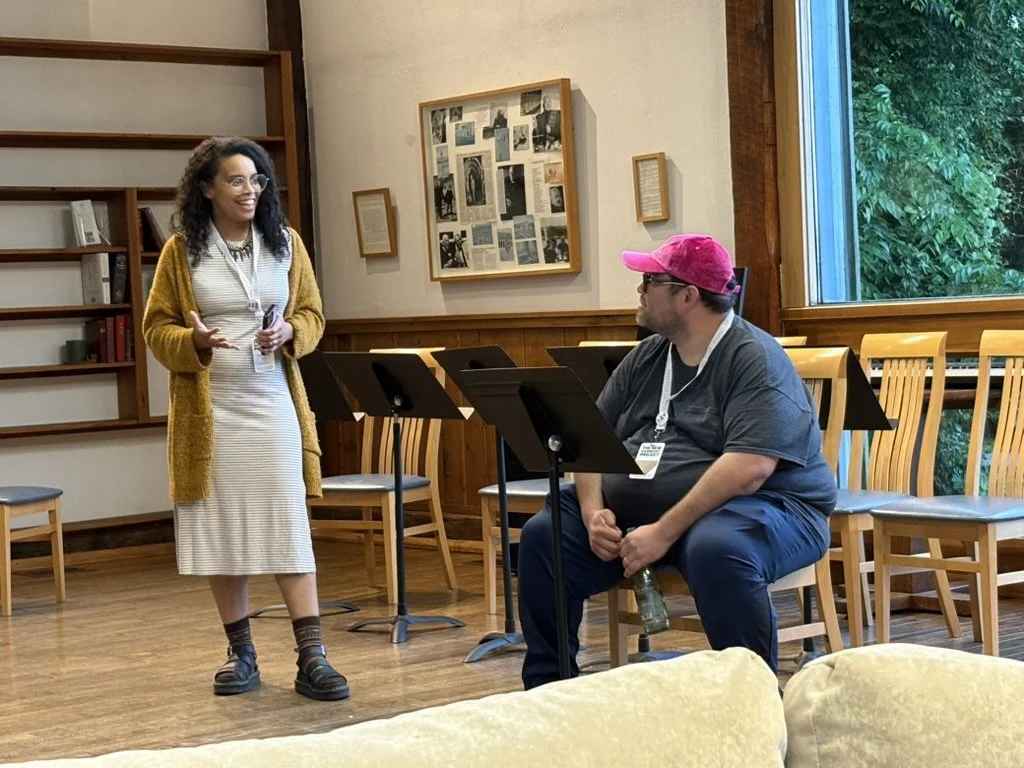
My son accidentally stumbled on a recording of a solo show that I did about myself and my father and a journey of looking for my dad. And he fast forwarded it because it was boring, naturally. Went right through it, this recording that he found, and I had not been aware he'd gotten a hold of my tablet and he was going through the video. And he reached the end where I directly addressed him on camera, and I told him, I'm sorry I'm not that great of a dad sometimes. I'm sorry I'm distant. I'm sorry for all these things. When I get home, let's go get a coconut popsicle together. And he comes up to me and said, ‘you made this for me?’ And I was like, yeah, kid, that's for you. And he's looking like, ‘you made a movie for me?’ And it's just like, who needs an Academy Award then?
You know, like, a child said, you made this for me. And because he heard his name being told to him, and he looked so happy that something was made. I don't think he understood that I was saying sorry to him. He was just talking to me. But that's so much better.
And that to me is like, oh, I can do anything now. It's so liberating when you know, my boss ain't the New York Times critic. My boss is the little 10-year-old running around who tells me, boring. It's like, you're right, it is boring, isn't it?
PHAEDRA: Honestly, it makes me so warm to hear all of these stories and your perspective, especially because I really do think when you choose to be parents, it's a radical act of optimism.
Just like when you write a play, you're making something to give to someone else, hoping someone else will take it forward and it will have a life of its own. And so I'm really inspired by this conversation. And I would love to know how your art has changed since becoming a parent?
FRANKY: That it's actually what you just said, is when you choose to become a parent, because there are people that they can certainly sire a kid or have a part in making a kid, but they don't choose to be parents. That happens a lot, but when you decide to make the conscious decision to be a parent and to be present, despair is no longer really an option. I always go back to like the Carl Sandburg quote, ‘a baby is God's opinion that life should go on’, you know, that to me, has been a North Star.
I see the world and I see how horrible it can be. We see the levels of cruelty and depravity that humans can reach, and yet, that is immediately counterbalanced by the laughter of a child running around in a park. That is immediately counterbalanced with a hug. Can you imagine all of that tremendous despair and misery that's happening out there to be eliminated by the power of a hug, to be eliminated by the power of an I love you from a child that's told so earnestly and told so beautifully. I don't have room for despair, even if my plays are very dark, they're, oh my gosh, they're so dark, and usually someone ends up dead, someone, most everyone ends up dead. Hope never dies throughout the entire thing. Never Say Die, you know, we go down swinging, because I believe in a future. And for me, that has been the greatest gift of having a child.
I look at my work as before my son and after my son. After my son, even if it ends in the worst possible way, it's always, I did my best, I tried my best, and I still believe that tomorrow things can get better.
I must go forward with that. Because otherwise, why be a parent? Why invest in the future? Why invest all those resources, all that money, that goes into children? I'm like, gosh, horrific little Lego things that I have to step on all the time and wonder about my life, the pain that children put you through physically, emotionally sometimes, it must be because you have hope.
It must be because you envision a better tomorrow when you choose to become a parent, and despair is no longer an option, and that's how it's affecting my creativity. I cannot choose despair, even if my play is despairing, it does not fall to nihilism, it does not fall to total misery, it tries for a better tomorrow.
“Once I had a child, I was suddenly remembering, I was suddenly seeing the world, at times, from a more childlike perspective, in ways that I’d kind of forgotten, you know.”
DAN: Yeah, I would say being a parent has focused me in terms of what I want to write about, what I feel like I need to write about. And it feels connected to a sense of stakes. You have a kid and you're more conscious of time, of mortality, of entering a new phase of your life.
I look back sometimes nostalgically on my 20s when I could be much more experimental with my writing, because I didn't have that sense of limited time. So partly the change has been that now I only write about either what I feel most passionate about, or I write for financial considerations. I write because I need to pay the bills. It's either one of those two things.
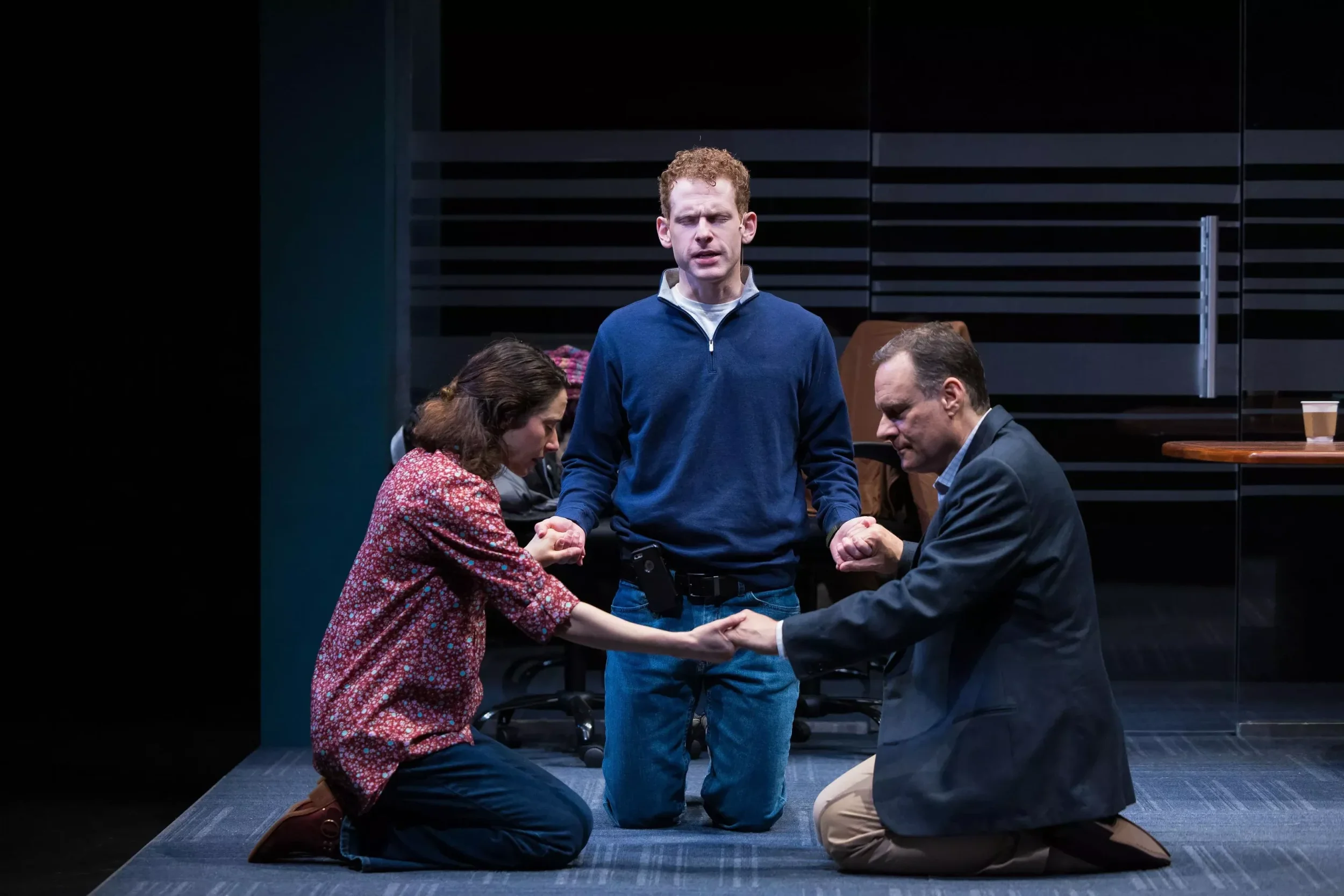
When I'm writing about what I'm most passionate about, I feel more focused and I think parenthood has changed me in a very literal way. Like my play Newtown, which premiered at Geva Theatre in 2024. I wrote that play because I finally had a kid. I wrote the rough draft of that when my daughter was old enough to go to school and have active shooter drills.
And maybe that's connected to the question of how being a parent changed you as a writer. You know, it is fascinating. I don't know how all of you felt. But once I had a child, I was suddenly remembering, I was suddenly seeing the world, at times, from a more childlike perspective, in ways that I'd kind of forgotten, you know.
And to write not just about issues that affect kids, but maybe to write about the perspective of children as well–that was a big shift. Until I was a parent I wrote a fair number of domestic dramas, they were often from the point of view of a child, even if it was still a grown child.
Being a parent, I'm suddenly writing stories about parents. So it just widened my perspective in terms of the types of characters I could identify with.
“Just put your thought and your curiosity and what you want to process out on paper and see what happens.”
SHAVONNE: I definitely began writing plays that I think my daughter needed, and now my son needs too. That made me think about the plays that I needed when I was that age and didn't get. I don't think I thought of that before they got here, the idea of like, oh, well, what did I need to see that I didn't see on stage or would have liked to see on stage?
And then too, it gave me this interesting sense of: write the play, do the thing, because there's somebody who's gonna find it interesting. Everybody doesn't have to find it interesting. Sometimes pressure tells you, I gotta write this play and it's gotta be a hit. But after I had kids, and I think it was probably because of some of the conversations I’ve had with my kids and the questions they hold, where I realized, oh, well, if 20 people see my play and that has changed their life, that's worth it.
I don't need 1,200 people to love my play, right? Of course, I hope 1,200 like it, but...
It [parenthood] just helped me get over that hump of this idea that I had to be a certain way or I had to be a certain playwright in order for that to be something I did or for me to be a playwright. Because I would often tell people like, oh, I'm not a playwright. And my friends like, stop saying that. Yes, you are.
And so it has helped having my kids, and watching them grow and having the conversations with them and even hearing them talk to their friends and going on the field trips and hearing their ideas and opinions. And I'm like, oh, there are other people out in the world who are wondering these things, or they want to see these things or they want to hear these things.
It's not just me. And so it has helped me to say, write the play, write the thing, see what happens.
And it was interesting because I was working on a play called Cause Play. Well, early on, I had started writing it, it was about young people in a school, but they were middle school age, and I had just finished writing Your Name is a Song, which is elementary school age. Suzan-Lori Parks was doing those Watch Me Work sessions, and I popped into one. And I asked, and the funny part, I don't want to ask this in front of all these playwrights, and it wasn't like I was worried about asking Suzan-Lori Parks, it was like all the other people, I was like, they're going to judge me. But I asked, what do you do to make sure that those people, because they're so close demographically in these two stories, don't start interacting with each other in my head and messing with each other's story?
And she was like, just be really specific. And she said more than that, but the basis of it was like, be really, really specific.
And so then I went back to write that play, and I thought they're going to be in Southwest Detroit in 1993, which is a super specific situation, right? I started writing it and I thought other people are going to think, what is this? Then I kept building on it, oh, and they're going to do cosplay, even though like black and brown kids in the 90s, we weren't talking about cosplay, but I wish I had known about cosplay, because I would have did it if I had known about it.
So it was like this. It was sort of all those things I just named, right? Like, what story do I need? What story do young people need? Also the specificity that I think other people think, you're a dork for writing a play about 1993 Southwest Detroit in middle school, kids doing cosplay.
But it came together lovely because it was all of those things. And I don't think that I would have written that story before I had kids because I would have been like, Shavonne, nobody cares about this, but my kids have shown me.
Hearing them have those conversations on FaceTime with their friends. I'm like, they're the people having these thoughts and curiosities and just do it. Just put your thought and your curiosity and what you want to process out on paper and see what happens.
Well, we don't really write on paper anymore, but in a Word document or Google Drive, right? So, yeah, it has helped me to be less critical of myself and to say, there's bunches of people that are interested in everything.
JENNI: It sounds like what you're all saying, too, is that not just that having kids changed you as an artist, but just changed you. And I think that's valuable to remember. I know when I had my son, I felt the need to become a huge advocate. I was going to speak out about things that were important to me, because what is the world I want my son to live in?
I feel like that's some of the things that you're all talking about, too, is that it changed the way that you moved in the world a little bit. Does that feel accurate?
FRANKY: For me, yeah. I did not know what forgiveness truly meant until I had a child and in dealing with the struggles of parenthood, because there are struggles, as much as we try to paint a nice house image, there are struggles with parenthood.
I found myself realizing, oh my gosh, I'm forgiving my deadbeat dad. Oh, no, I'm forgiving my deadbeat dad. Oh, no, I'm empathizing, because I want to run right now. I want nothing more than to leave this situation. Ah, dang. And in that finding, in becoming a parent, finding grace is one of those things that it fundamentally changed me from a very dreary, bleak, angry outlook at the world and at people, and understanding that we are all living in our circumstances to do the best that we can, and having to find that in myself.
It's a fundamental change that has affected everything that I write and everything that I do and how I move through the world and how I interact with people, is to know, oh, this is why my dad left. It doesn't excuse him, but I understand it now, and I can find forgiveness in this.
DAN: Yeah, in a connected way, I think it changed me. I consider my upbringing to have been pretty abusive emotionally and psychologically. I feel like parenthood brought me some forgiveness for my parents, but not in the sense of like, accepting that abuse is okay.
FRANKY: Yes. Yes. Yes. Yes.
DAN: But forgiveness in the sense of letting it go and then being incredibly aware and grateful for the opportunity to give my child an upbringing that is full of love and acceptance. Of course, we’re all human, and I know I’ve made mistakes and will make mistakes, but I like to think that her upbringing so far, and hopefully, knock on wood, will continue to be one that has only the normal amount, or the functional amount of distress and challenges.
I’ve been very aware of just the joy of being able to give my daughter whatever the opposite of abuse is–love, authentic love, support, love for just who she is that's not connected whatsoever to, you know, her performance at school or, you know, what she can achieve in sports or what she can achieve one day in the future.
I was raised very much with–inculcated with–this idea that I needed to be a high achiever, and that this was the only way I could receive any sort of love or respect. And it’s taken decades of therapy to undo this belief. It's been the privilege of my life to at least try to communicate to my daughter that she's deserving of love just because she exists. She needs only to feel loved, and to love others.
And this idea connects to writing, for me. We write a lot of times, obviously, to support ourselves, but I don't think we write plays, and I happen to write poetry too–you don't do plays and poems if you're not writing for love. If you're not writing to express love and to connect with people and to express how you value other people.
“And so there are moments where I’m trying to do what I love, but also I’m not providing my kids with a second supportive parent or the life I feel they deserve.”
SHAVONNE: Mhm. Yeah, you know, it's interesting to hear you all talk about forgiveness in that way. And I think it has challenged me in a lot of ways to learn to forgive myself, because for things that often are not subjective, but in a lot of ways that aren't my fault.
So when I am in the moment where I do feel desperate because I'm doing this alone. I have a lot of support from my mom. I have a lot of support now that I'm back in Detroit from my brother, from my uncle, but when I was in Austin, Texas, it was just me and my mom.
And my mom ended up coming to live with me, but she always said, I ain't raising no more kids. I'm here to help, but I ain't raising. And I'm like, and as you should, because you did a great job, you should not raise anymore.
There's moments when I'm figuring something out by myself or when any amount of a second income would be helpful. When having anybody to look toward for an emergency would be helpful, when those moments come in, I blame myself because my mom and dad growing up taught us to do what we were passionate in.
My mom didn't love her job. She worked in a plant. My dad loved his job, but he was a social worker. And they both always taught us do what you love, do what you're passionate about. And they were really supportive parents.
And so there are moments where I'm trying to do what I love, but also I'm not providing my kids with a second supportive parent or the life I feel they deserve. And am I hindering them from understanding what it means to not work yourself to death and all these, right?
There's all these things that creep in, a lot of that's not my fault, but at those times, it's like...because of society, because of stigma that Franky brought up, we often, especially as women, blame ourselves. Especially if you're an artist, because like right now, my kids are with my mom, right, and in these next four or five weeks while I'm directing the show Eclipsed by Danai Gurira at a regional theatre as opposed to in TYA or an educational setting, the schedule is wild trying to pick them up and drop them off and they sleep with Grammy, their Uncles pick them up and drop them off and I’m getting an hour or 90 mins with them daily,so there are those moments of like, dang, Shavonne, what are you doing?
Therapy, as Dan said, has taught me to forgive myself, forgive those things, because I'm much quicker to forgive other people than myself. Even for things that I don't have anything to do with, and even in the choices that I've made artistically. You didn't finish that play, forgive yourself, you also have four jobs and two kids. You didn’t move to Chicago or New York and do this thing you thought you would do when you were 28 and instead you were having a kid, forgive yourself. Obviously this is what you're supposed to do, you're flourishing, you're doing your art, you love it, you're happy where you are, so it has shifted me in the sense to be more forgiving to myself, and I still struggle with it, I ain't gonna lie.
I think before I had a child I was even less forgiving, and now I have been challenged even more as a single parent, as a mom. As a mom, some days you go home and you're stressed because you have the million things, and you're like, don't do that, and you're like, oh, I just yelled, and now I am learning to say I'm sorry to a four-year-old or a five-year-old or a two-year-old or a 11-year-old, and that is part of my practice, chill out and come back and be like, I am sorry mommy did this, that was not the thing I should have done, and let me feel all my feelings, and hope you understand those and you should always feel all your feelings. So in those moments I'm learning, and they're helping me learn and their little faces and their honesty has helped me as a person shift both as an artist but also as this human that's showing up for other humans and for myself and I think that I'm working on it for them and for myself.
FRANKY: Based off of what you both said, really for me I tell my son you owe me nothing. I'm here because I want to be, I'm here because I choose to be, you owe me nothing.
But at the same time I owe myself my self care. I owe myself these things. I owe myself my humanity. I cannot depend on my kids to deliver that to me. You know, even though I might make a joke at this, this is the life insurance policy because playwrights don't have insurance.
SHAVONNE: No.
“I owe myself my self care. I owe myself these things. I owe myself my humanity. I cannot depend on my kids to deliver that to me. ”
FRANKY: Because he owes me nothing, I have to also take the other opposite end of that spectrum, I owe myself this, because I have to take care of me too, I have to be able to make sure that, in order to make sure that I don't feel any kind of resentment, and I don't let anything fester.
If I truly mean that he owes me nothing, then that means that I owe myself something. I have to credit my account somehow, somewhere, spiritually, emotionally, however, and be okay with the fact that sometimes I need to take something for me, in order to make sure that I can still be myself.
Because I will say one of the, one of the grand pitfalls that I've seen, with, not necessarily parent artists, but parents who will eventually become empty nesters as they lost their entire identity to parenthood.
And coming out of that becomes a crisis. And honestly, I think that's the biggest fuel for midlife crises more than anything, you know, is the who am I if I am not a parent now?
And I think as artists, we hold such tremendous things as being a parent and holding that identity and then also being an artist and creating things. We're constantly creating and molding something. And we have a very unique escape hatch. But it has to come with the reminder that we do have this thing that we owe to ourselves.
If we truly mean what we say to our kids, you don't owe me anything. I owe me something, you owe yourself your happiness to kiddo. At the end of the day, I can do anything I can, but you have to give it to yourself to be happy. No matter what I give you, no matter what advice, how much I protect you, it comes down to you.
And we have to also give that to ourselves as well. And that being a parent taught me that. I can't tell him he owes me nothing if I don't owe me something, you know?
PHAEDRA: We have one more question, what are the stories that you'd like to see for the next generation, or stories that you want to make for the next generation?
DAN: I'm curious and excited to see the stories that the next generation will create. I have anxiety about there being an active, thriving theater in five years, in 10 years, in 20 years. But one of the joys of being a parent is being curious. What's it like to be a child now? I look forward to seeing what my daughter's generation will be creating as they grow older.
I think we're in such a strangely conservative time culturally, in some of the more obvious ways, but for financial reasons, I feel like so much theater is very constricted. I do have a hope that there will be a theater that becomes more varied stylistically, varied thematically. I have a hope that the theater, and this is true for TV and film too, continues to recover from the contraction that we've been dealing with for many years now.
In terms of the theater I want to create, I want to keep modeling freedom and compassion and creativity, and challenging myself to write about what scares me.
“What’s it like to be a child now? I look forward to seeing what my daughter’s generation will be creating as they grow older.”
SHAVONNE: I would just say more. When I read that question, I was like, more. But just the idea that it is more. I think it's okay to have that black box storefront theater with 50 people in the room that get it or like it, and then maybe nobody else does. So just more. How do we create space for more things?
I think that's part of hoping that theaters continue to thrive, shifting the ways we think of what theater should be and what should be in them and what should be happening in them. So that there are more opportunities for more people to write and be produced. And I get that that also takes money. I'm not going to ignore the fact or pretend like money is not a thing. How do the people who say, ‘I'm not a playwright’, start saying, ‘I'm a playwright’? How do the people who never even thought of, or even know what that word is, become the playwrights?
I operate in stories, I memorize information in stories, I connect with people in stories, I problem-solve in stories, and I think a lot more people do. We're so used to shutting down stories, we don't have time for that in this meeting, or, when people say if somebody tells you something, don't answer with a story. I'm like, please answer with a story, if I'm talking to you. So, how do we get more stories, and be less critical of: Is it a well-made play? Is it a play that 1,200 people will come see? Is it a play that could make it on Broadway or off-Broadway?
The idea that all these stories are needed, and what is it like to have the curiosity of going to just hear stories. Like at New Harmony Project, when we would have salon nights, I had never heard of this, and I was like, I could just do this all the time. This would feed my soul to just listen to five people come read plays every week, right?
I don’t have a great answer except for, more. How do we figure out more? And sometimes people say ‘it has to be good’. No actually, it doesn’t. I don’t think that has to be the case. They can be thrown in there to be not good, if the attempt to truthfully tell the story is horrible, just let it be. Let’s get more!
FRANKY: I think my answer for this question is, it’s a two parter, and a third little. The first thing is, just from a weird, nerdy perspective, I want to see what that is trending now survives 20 years from now, what is still around that you see like for its time, certain cultural touchstones that might have won the big Academy Award, or even the Pulitzer or something like that, are barely talked about now.
And they get lost to time, and they were just of their moment. And then that one little niche thing that nobody really saw that kind of got derided and had made views and everything ends up becoming the thing that we reference a whole bunch. I'm thinking of like movies like Escape from New York, or a lot of those kinds of edgy, hyper macho guy films, and they're bringing that kind of aesthetic back that kind of like synth wavy Blade Runner kind of feel that it was niche back then, but now that's how we remember an era.
I want to see if Skibidi makes it 30 years from now. Is it going to make it? Will it come back? Or will it be like so many boy bands of the early aughts that there is only NSYNC or the Backstreet Boys that remain in our cultural conscience 20 years on? Those are the stories that I'm into. That is one thing.
A more personal, hopeful thing, the stories that I would love to see be told is to see the current tragedies and troubles that we are going through right now be reframed as comedic things that are considered quaint and how silly were they back then. The way that we look at, say, some tragedy, some comedy about the French Revolution, and we see the satirization and we laugh at the nobility and how foolish and silly they were, but for its time it was deadly serious what these people were doing. But we can now see it and laugh at it. I hope that we can reach a place in our society where we can look back at how foolish we all are and say, oh, how silly were they? This is all so foolish. And it becomes almost its own theater of the absurd, its own version of Kafka's bureaucracy turned into something that's really hilarious.
And then finally, what I want most changed is where the stories are told. I hope that how we tell the stories evolve beyond the edifice of the stage and that we see truly what Shakespeare says, that all the world is a stage and that we don't worship at the temple, at the altar of a building, so much as we try to create and generate story for each other and know that a play is just as satisfying for a group of 10 friends inside of a living room together reading as it is on the main stage of your favorite off-Broadway theater, of your favorite Broadway space, whatever it may be.
I would love to see theater thrive in a way that the actual institution as a concept, as a brick and mortar kind of place, it has its place, but it's not the only place and we don't see it as the only place, and we don't see it as the only theme that denotes currency and value. That's what I would like to see for the future of storytelling in theater.