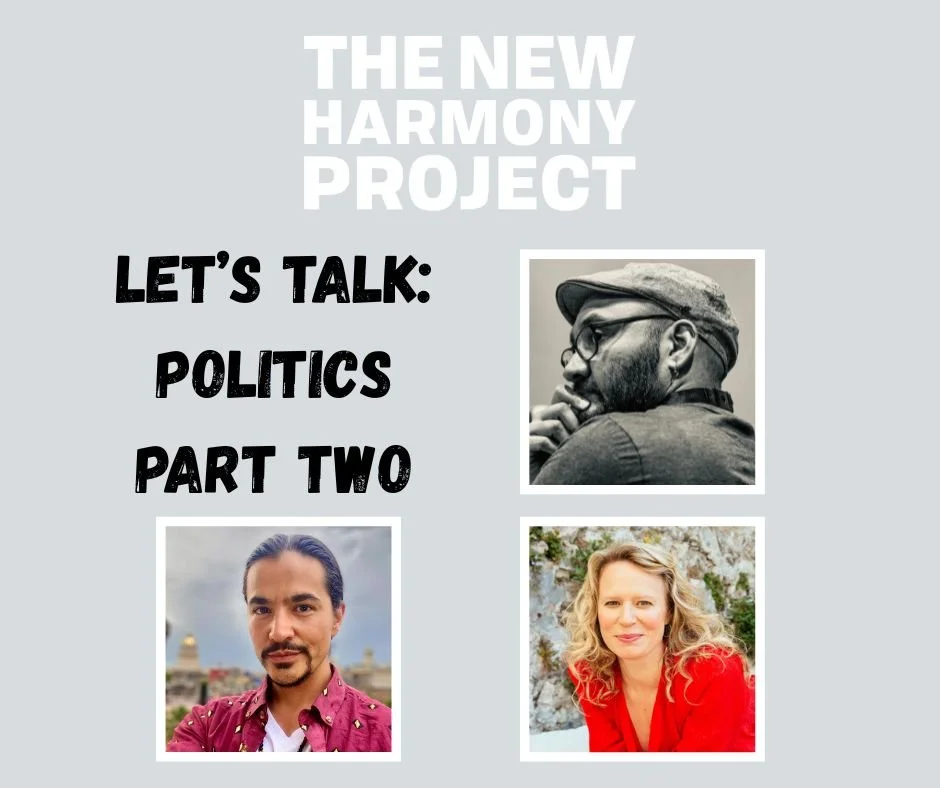
The political landscape has exacerbated a moral divide in the United States. Artists are facing battles on multiple fronts, from personal identity, to a scarcity mindset of artmaking, to our differences being pointed out as failings of a community, rather than strengths. How are artists responding to this moment in time? How is it impacting their work? And what is their responsibility, on a social level, to engage with the topics of the moment?
Jenni Werner, NHP’s Executive Artistic Director, moderates this conversation between three NHP alumni writers: Mashuq Mushtaq Deen, Ty Defoe, and Jessie Dickey. Read their bios here.
“I feel in particular this year, there’s a poly-crisis that starts to happen, being both indigenous and just existing and breathing air, that I actually have to take and draw strict boundaries for myself to take care and to take rest...”
JENNI: To start with, I want to ask you, how are you protecting yourself as a creator in this time? How are you nourishing yourself artistically?
DEEN: Can I ask how you mean “protect” in this context?
JENNI: Given what's happening in the world right now, what are you doing to take care of yourself? Maybe that is a better way of saying it; it could be personally, it could be as an artist, however you would interpret that.
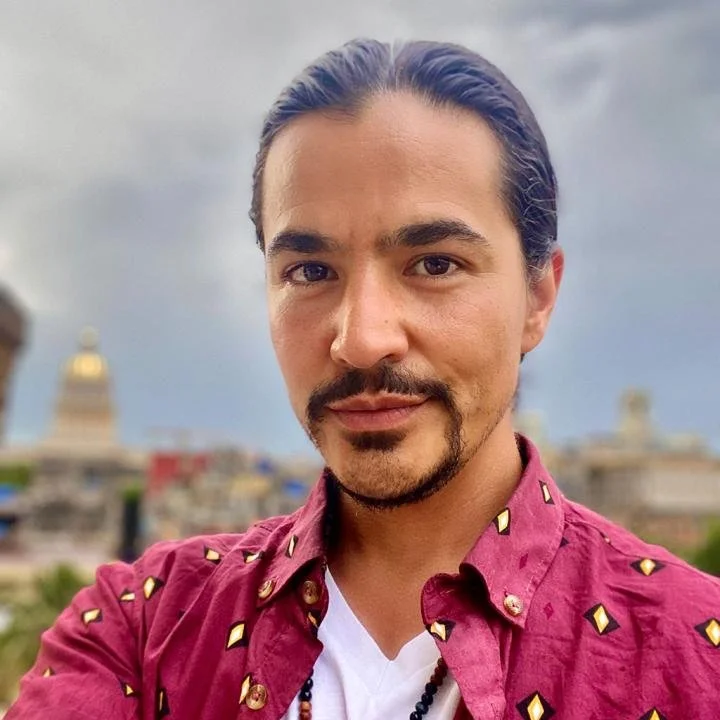
TY: Yeah, I have a couple things. I'll kick us off here. I was thinking about that. Love this idea and parsing out the word, protect, and moving it towards care. I think there's something really important about care for community, because I love thinking about: how are we storing community, and then, how am I also a part of that community? And thinking about, as the world's on fire, and my particular body as a trans person's politicized, how am I taking care when I'm trying to write this thing in my mind and keep ahead of just basic assignments that need to be done, meanwhile putting out fires.
I think for me, it's the game of longevity. I think about that, so rest is important, I'm a big fan of the nap, I'm like, I am tired, it's time to sleep right now, and for me that keeps my spirit going. It keeps me moving through the scenes, and sometimes getting that brain reset, because oftentimes I feel in particular this year, there's a poly-crisis that starts to happen, being both indigenous and just existing and breathing air, that I actually have to take and draw strict boundaries for myself to take care and to take rest and to be like, Ty, go outside, go for a walk, and then boom, the information happens.
Or call, you know, the young people in your life. They might have some joy that you need today because it's a shitstorm out there.
Or there's other things that I do too. Sometimes I need to sweat it out, so I'll randomly sign up for a dance class or something, and I'm sweating and making a fool of myself because I need to not take myself so seriously.
Those are just some tactile strategies that I do to remain in my body and remain in my own mind and remain in my own thoughts. Sometimes that happens. Sometimes it doesn't. Like, I epically fail at that. I'm really trying to stay awake to the current moment, also the work that I'm doing with integrity. So those are just some important things for me.
And gummy bears. We love a gummy bear over here. Listen. Sorry, I love a gummy bear.
“I found myself meditating on the fact that this might be a time when I need to separate how I survive financially and how I survive artistically. ”
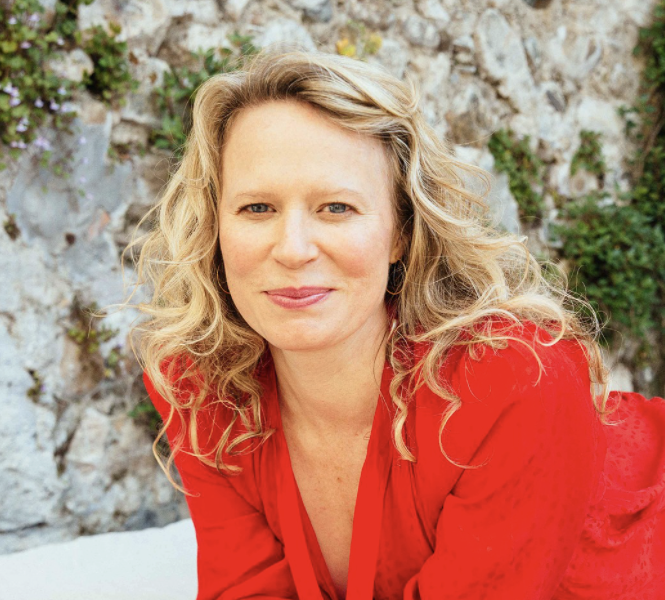
JESSIE: I can piggyback on that because I resonated with a lot of what Ty was saying. Especially at one moment, you said trying to be awake to the current moment and specifically not protect myself from it.
And yeah, try to keep going back to the practice. Like... What is my practice? What can I do for my practice today?
And sometimes, some days, that's very, very simple. What can I do today is a question that I sometimes have to ask to get out of a swirl. Can I put down some of the bigger things right now and just take a look at what I can do today? How can I move the blob forward a little bit today? I have friends that remind me about that a lot. That's been really helpful.
I should also say, this has been really since the pandemic, I'll advertise for the app, Marco Polo, because that has become this daily communication tool that I'm using with my artist buddies to just stir the soup together and jump from noodle to noodle on what's going on today, what we're carrying today, what we woke up with today, what's our weather today inside, and how that's connecting or not to the weather in the world outside, to the political world, to the literal environment that we're standing in. That check-in has become really important for my care.
I also love a nap. Getting up in the morning with my morning temple, as I lovingly refer to it– my coffee.
With my journal, read the paper, woo my cat to cuddle. If I can give myself an infrared sauna at some point in the month, that's become really lovely. I eat more meat now. I guess what I'm trying to say is, I also really resonated when Ty said longevity. I had this talk with myself that I admit came out of this larger panic that was sort of funneling down into a financial panic. I found myself meditating on the fact that this might be a time when I need to separate how I survive financially and how I survive artistically. Those might not be the same thing for a while or in a way that was not how I've been thinking about things for a few years. So that was a really interesting thing to meditate on.
I think that was also my way of turning my ear inward to try to find genuine impulse in there, something that's coming from the quiet place inside, something that's coming from the me that's in the dark that whispers upward, that has medicine for me. If I can manage, bear to hear it and bear to carve time and energy to pursue it and listen and write about it, investigate it, churn it, and work with it into whatever I might need to write next.
Does that make sense? There's a phrase that is very Pennsylvania, the phrase ‘meat and potatoes’ just came into my mind, but something about the meat and potatoes of care and trying to let that be a system that probably needs renewal and reinvestigation and kind of fresh research into like, well, what does care look like now?
What about you, Deen?
“People have lived in dangerous times for a long time, and have made art in dangerous times for a long, long time, and still are.”
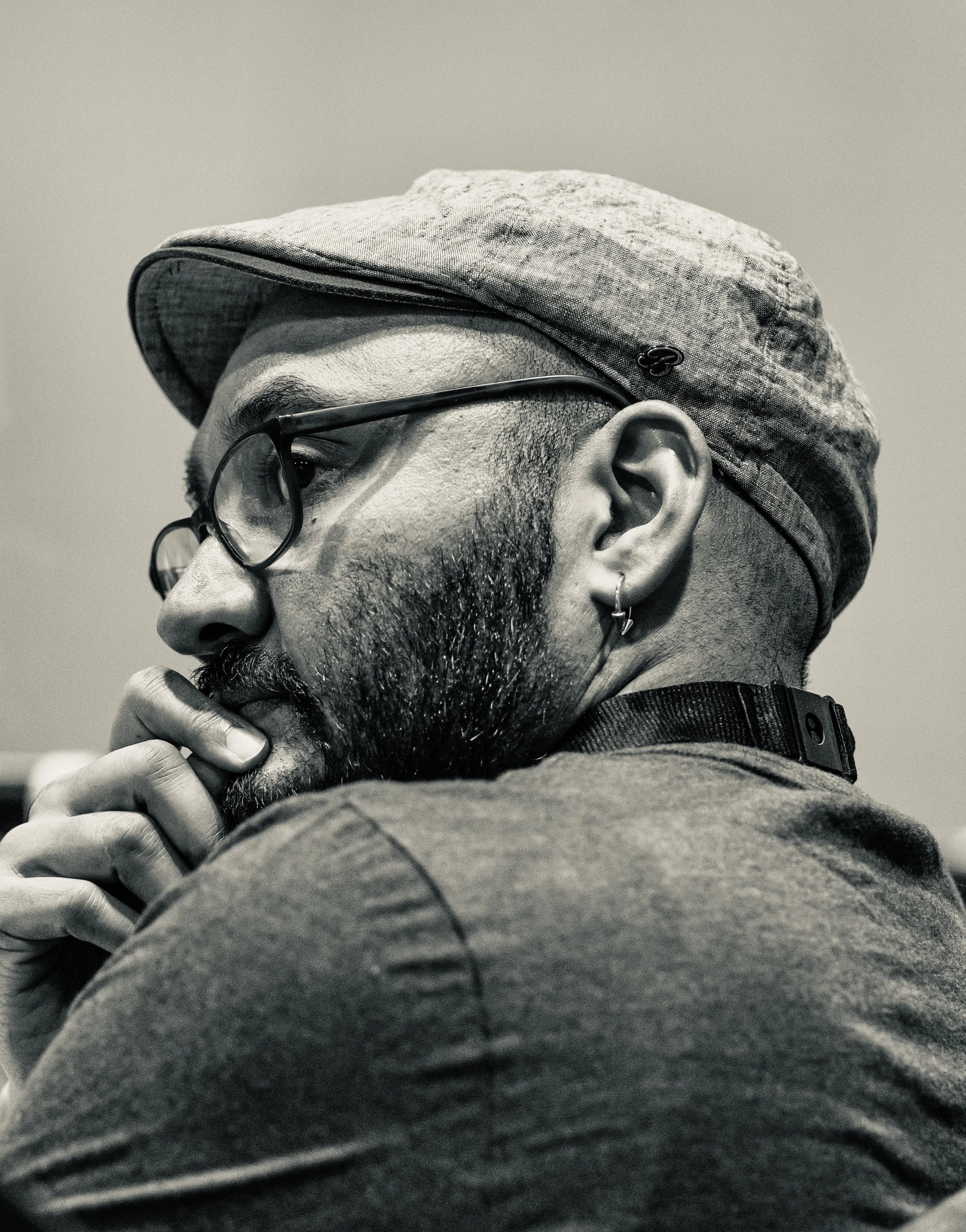
DEEN: I can resonate with a lot of what both of you are saying. Longevity, quiet, the inner voice, those all feel very true. I would say the early part of this year was very up and down for me. I felt very tossed by the storm. But I also began a chaplaincy program this year in March, which as Jessie would know, is kind of a long time coming.
Part of the practice and the study is to focus on the “right now” and to work on the Buddhist precepts and the meditation practice and different things that maybe I already do, but now I'm doing in a concentrated way. And to be with people who all care very much about the world, are not afraid to talk about the spiritual aspects of it, and how it affects them and the people around them. They are committed to walking out into the world and doing the one thing that they can, even if it's small. And then doing the next thing that they can, even if that's small. And I think the whole practice is helping me to zoom out.
And part of that is getting off of – I mean, I have been off of social media for a while, but like – the zooming out to see the broader brushstrokes, instead of each individual panic, and to try and understand the system of what's happening. And to remember that people have lived in dangerous times for a long time, and have made art in dangerous times for a long, long time, and still are. And so something that Jessie said first I would expound upon: I think as an artist, my job is to not protect myself, but to be as vulnerable and open as I can. And in order to do that, I have to protect myself from the overload of voices and chatter.
There's a lot of reactionariness, and that is also not good for me or my soul, but … all of this is also not that different than what I have to do as a writer all the time, which is to find the quiet place, pay attention to that inner voice and my values and the inner workings, and try and let go of all the things that pull me, and that's always true of me as an artist, and it is true of me now.
(Also, as I do not like to sweat, Ty, personally, because I'm fussy that way, but–) I did take a clown workshop last spring, and it felt almost like part of chaplaincy in a way that’s hard to explain…, To be in touch with this vulnerable clown inside me who I've known for a while but this little one had no one to play with, and to realize, actually, that that clown's actually more in charge than I realize, and that's a good thing. And I should stop thinking I’m in charge.
I'm writing absurdist work, and I was telling a colleague that I have to let the clown be in charge and they asked, how are you gonna do that? And I reponded: Ask him if he wants to, and then listen to him and if he doesn't want to, oh well, he doesn't want to, he gets to do what he wants, he's not a tool to “use.” I think about what are my values in this time – not to get something out of people, but to be the best person I can be, and to see what what I can offer.
“I think as an artist, my job is to not protect myself, but to be as vulnerable and open as I can. And in order to do that, I have to protect myself from the overload of voices and chatter.”
JESSIE: Can I piggyback on that and just keep swirling? Because what Deen was, I mean on a personal note, it is very moving to hear Deen describe doing a chaplaincy. Deen saw me probably shoot sparkles out of my ears or something about that, and it made me think about how I have felt this impulse to expand my toolbox. And, that even sounds too utilitarian, it's almost like that quote: “the best thing for being sad is to learn something.” To let myself take in different sources than I might have, and hopefully, actually, begin to figure out what I'm really there to learn, what medicine could be there.
Like I took a death doula class, and it was really moving and provocative and beautifully executed. And I felt so grateful to just be led and to learn and to be in a larger group of people from all different walks of life that had come to this endeavor for their own reasons. Something that came up in the class feels related:
The death doula keeps an eye out for the emerging circles of care of the dying person. There's the dying person in the center, and then there's the inner circle of care, and then the extended circle of care, and the community circle of care, and those are all central to the dying person and their transition.
It made me meditate on, Who are my circles of care? Who do I want to [be] in my circles of care? For whom am I part of a circle of care? I found it a really ancient, big, and yet incredibly quotidian, basic thing to think about.
And that contrast really feels right for this time. I feel like we're sort of describing keeping an eye on that wider weather system while also being step by step on the path as best we can perceive it. And to participate fully in each step and what it's asking of us so that we can take the next one.
But there's something about this time that's made me want to learn more, or kind of look elsewhere and open up, throw off the reins a little bit and let myself think differently about how I participate in the world and what roles I currently play… Are there ways I can enrich how I play them? What else can I take in? Maybe giving the soil some moisture, some nutrients or something for these bewildering times. Ty, I would love you either to take that or pivot elsewhere, by all means, but have you felt anything like that?
TY: When you mentioned this idea of death, I think about life at the same time, and that these two paradoxes can exist, right?
Like, we're in continuous spirals and circles, continually and how it nourishes at this time, I look to nature often, like, in my writing, also in other work, but also places I go to, to find that inner quiet that you both mention. Whether it's a hike or seeing a chicken of the sea mushroom, which I recently saw, or a quest for a giant puffball, I feel like these natural wonders bring about a type of joy because even though there's sadness and tragedy, there's also on the reverse end of that, there's also a lot of joy that is a form of resistance and a form of strategy in terms of this politicized time and politicized times from the past. There's something important to me about these concentric circles of care, of nourishment, of protecting. I'm sure I can fan it and parse it out.
The other thing I was thinking about too, was about, I told the story once and it was about how to care for this porcupine. It's been right over a decade since I found a road kill porcupine, and I remember the needles are very sharp, plucking these porcupine quills from this sweater and washing the porcupine and like having the ceremony for it and getting the other residents to come around this porcupine, and you know I'm laughing and smiling because it was like in this moment where we were offered time space to rest, to strategically indulge in our creativity, we are able to cultivate and create community right in these utopic spaces that I think residencies can be like New Harmony and others that I'm sure you've all been on.
And just thinking about death and dying it was like wow there was so much life in the death and dying of these quills that I plucked and everybody every day would come to check on the quills to see if they were being cleaned and by the end of the residency we all took like a quill home with us, and put it in a little jar. But just thinking about how death, there's continuous life in that too.
I like to imagine these quills all over, from people from different countries and different places who are connected by this little porcupine on the side of the road. It smelled really bad. But, you know, that's another story. But, we all got together and took care of it. But I don't know, it was very nourishing to be together in that way. So, Jessie you’re reminding me of that time, and how much, what death and dying and joy and togetherness can be.
“There’s also a lot of joy that is a form of resistance and a form of strategy in terms of this politicized time and politicized times from the past. ”
JENNI: I feel care in this conversation right now. I love this conversation. But I want to switch us to the next question, actually. We decided to start this series with this question about political theater, partially because Dan O'Brien, who's one of our alumni, wrote an essay called 40 Questions on a Political Play that was inspired by his play Newtown, which is about the Sandy Hook murders, and that had a production at Geva Theater in Rochester, New York, which is my former theater home. I think he was sort of grappling with: what does it mean to write about something that is hard?
His essay is all about political theater. And so we wanted to start with talking about, especially in this time, what is political theater to you? How would you define it? And would you say you write political theater?
“I think that the role of an artist can be, and maybe even should be, to stand outside the system and provoke it, and poke it, and ask questions of it, ask questions of the status quo, even the status quo parts that we like, and especially the ones that our friends tout as good things. ”
DEEN: I'm not going to be able to quote this right, but Oscar Eustice once came to us when I was in the EWG [Emerging Writers Group] program, I think he was quoting another story somebody told, and this person was asked, ‘how do you write political theater?’ And he said ‘I live a political life.’ This is true for me. I can't not, it's just the nature of who I am.
And so I sometimes think about that. Almost every lens through which I see the world is liminal, it's a complicated lens.
So I'll start there, but I think that the role of an artist can be, and maybe even should be, to stand outside the system and provoke it, and poke it, and ask questions of it, ask questions of the status quo, even the status quo parts that we like, and especially the ones that our friends tout as good things. All of the status quo’s. Questions about how we're governed, how we're grouped, systems that we have to navigate, inequities.
But I also think, and this is one of my frustrations right now, that I don't think good theatre gives answers, and I'm seeing a lot of theatre right now that is giving me an answer. I think good theatre, especially around this realm, asks you an unanswerable question that forces you to move your heart, your value system, out of where it was, and then to reckon with it. And I think as artists, we'll always be outside – and maybe we should always be outside – of any system. So I think there shouldn't be a party line, or there shouldn't be a thing that we're toting because then we have become part of the system. That said, I think any definition is inherently flawed. As soon as I've said it out loud, I've left a million things out.
For instance, then there's a place for just Beauty. I was at a gathering of Middle Eastern theater people at The Lark. An international group of artists had come. And one of the things they were saying is that, ‘just because I'm a Middle Eastern artist does not mean I'm writing about being Middle Eastern all the time. I might write about a butterfly and I get to do that, to write about beauty.’ I don't have to just write this identity thing that you expect me to write. I very much believe that. I'm gonna write about the whole world, not just about being trans, not just about being brown, not just about being any one thing. I'm gonna write about all of it, and so I think it's all of those things, too, and that feels like a poor definition already as soon as I said it out loud, but that's what I got.
“I think good theatre, especially around this realm, asks you an unanswerable question that forces you to move your heart, your value system, out of where it was, and then to reckon with it.”
TY: Yeah. I was thinking about this, and similarly, Deen. In thinking about this, I think that theater and life isn't separate for me, per se. I think about all forms of story, and because of settler colonialism, it has made my ideas, my thoughts, my being, politicized. I can't even imagine necessarily a world, even when I write futuristically or anything, where it's not politicized.
Theater is a tool for civic engagement and social change. And I'm probably very leaning about social responsibility, but there's some kind of obligation rather than spectacle towards land, just thinking from an indigiqueer lens.
I'm definitely wanting to question those who have had the most power where, there's so many different plays that I can name that I have seen that aren't like my own peoples, my own community, TGNZ community, LGBTQ+ community, where people have had to make things underground to create spaces and places of joy. Because the dominant system has so further oppressed these stories that could not be seen. Right in 1978 for example when on Broadway Grease that was happening, right?
When the Pink Ladies and John Travolta and everything like this, where Native people were being jailed and sent to prison for singing songs on the streets of the United States of America.
We're jailed and sent to prison for gathering more than two people at a time that is in the Constitution and written into law. So there's a real discrepancy that I feel in terms of what is allowed, what is right, etc. So that's why I do believe in the power of theatre. Telling good stories to get people to think, to change, to maybe think in a different way that they never thought about before.
“I think about all forms of story, and because of settler colonialism, it has made my ideas, my thoughts, my being, politicized. I can’t even imagine necessarily a world, even when I write futuristically or anything, where it’s not politicized.”
I think playwrights who were even here like 20-30 years ago never got their time because, you know, the great white American theater wasn't looking at race in a particular kind of way. So, and I'm talking as a futurist who's thinking about a pluralist society where everyone's voice actually does matter, no matter who you are, because in some form or another, the system has oppressed people. So when I think about political theater, I think it has the power to create policy imagination, policy change, it has the power to ceremonial, bring people together.
There's ways of research that could bring back things that have been since silenced and we're seeing that a lot now. I recently was in an LGBTQ+ archive that got federal funding cut and so that whole archive is closed and no one will know those stories of the night. So when I think about theatre, it's a chance to get especially into rural communities who are the most oppressed individuals, who are influenced by folks in larger cities writing work.
We have a chance to narrative shift and change. And I think the role of the artist is to make it fun, make it playful, make us cry, make us sing. I think there's so many things that, there's a type of responsibility. I'm using responsibility meaning, how are you going to change the world?
And I think, sure, that's like the goal, the end goal. Some of those things that have changed myself fundamentally that I've seen where I'm like, oh my gosh, I want to do that. I want to have a cathartic moment in a play where I'll always remember what darkness was when I went to go see Angels , and when the lights came up, and there was this huge angel in the sky, there's something about that, that I think comes out of this idea of care. Of political theater that becomes really important, so I think it's something that can feel like it's scary, but it's not. I feel like it's this care, gentle, bringing people to the circle so that we can listen, hear, and understand each other to work towards a pluralist society. Like, let's go to the fire, let's get out the marshmallows, let's get the chocolates, let's get the graham crackers, let's do it, let's do it, you know?
So, I don't know. What do you think, Jessie? I sense a food theme happening. I think you got my number.
JESSIE: You know, when I read this one in the email, I felt this familiar feeling of this sheepish, like, ‘Oh, I don't know what I think of myself in this area’. So, I sat with that for a little bit, when I was thinking about this question. And then, once I went through those voices for a little bit, there was another layer of the question which I realized is probably how I really feel. It was something along the lines of, this is inching up toward what you were just ending with Ty, and I think really connects with what Deen was starting off with too… Something about the idea of writing political theater shuts me down a little bit actually.
Something about the moniker of it or something, the mantle of it. I think about my shortcomings in political conversation when, man, I'm not very proud about this, but I quickly become emotional, I quickly cry.
I don't think of it as the arena where I contribute much. I become muddled and I come up against my limited capacity to be articulate and clear eyed and use my words effectively. Which is really interesting, actually, to say out loud to other people. But the next layer of the question, for me, was something about the way theater asks our touchable, destroyable selves, with hair on our arms and, you know, fuzz on our cheeks, our eyelashes. Like these frail bodies we live in– to sit and watch an event with other bodies, made by other bodies, and our bodies go through this real time experience together… That feels inherently revolutionary to me, even though it's ancient.
It's like my little emotional car pulls up to the street called Political Theater, and I'm like, ‘uh-oh’, and I hit reverse, and I'm like, ‘oh, boy, no’, now we have cameras in the front. How the fuck did we drive without those for so long? So I look in my camera, and I'm like, back up, and let's see if there's another way here. Avoid highways. I put that option, and then I'm trying to have a nicer road ride than that somehow. It's like I have to back out and go another way. And trust that because I'm trying to be, back to the first question, because I'm trying to be awake in this world, and in all the pain of my responsibilities, both that are in my lived experience and in my cultural inheritance, et cetera, and try to find a story that I know sits uncomfortably in this light and dark.
Exactly what you said, Deen, that lit up for me. And what you were saying, Ty, about creating the circle and then something's going to happen inside the circle that sort of moves through us and sends us outward back into our world, that I can get on board with and I don't find myself questioning or cutting off the impulse to begin or to drive windows down and get going.
I didn't get to read Dan's article actually. And Dan O'Brien is one of my favorite writers. He's really important to me. I just think of Dan as a very singular writer who is very in touch with his own mind. My guess is, he would describe that in terms that sound like anything but being in touch with a singular thing, like his own mind. I think he experiences his own mind in more porous terms than that, and I appreciate that so deeply. I'm also searching for what can I go see. Maybe it's because I suddenly spend a lot of time per year in a place where it's very rural. That's a tough one for me.
I grew up in a very rural place, and I was pretty clear, once I turned 18, bye! I don't want to live in that anymore. But I find myself in a rural community in France where I'm American, and I also know I am very American. And that has been, gosh, there's a whole lot to unpack about that, you know?
But I cannot hide, like, no, I'm not walking down the street in France fooling anyone that I'm French. I'm like, ‘ How do they know I'm not French?’ But no one thinks I'm French. So that's very interesting. And then to feel this unfolding narrative and dissembling… I'm sorry, I can't believe I stumbled into this neighborhood of my brain…. But people will say to me, ‘Aren't you so glad that you have a way to live in France right now?’ And the answer is no.
I seem to be a person that would rather be near than far, and I'm surprised to say that to you. I need to be in the same room with the pain. What feels very frightening to me is to feel distended from where something's happening. It feels better to be with my family member who's suffering than to paddle away and be like, whew, now I can just go be in this pretty country with great cheese. I don't draw comfort from that actually. It feels better to land in the States and feel the fear and worry more immediately.
“I’m trying to be awake in this world, and in all the pain of my responsibilities, both that are in my lived experience and in my cultural inheritance, et cetera, and try to find a story that I know sits uncomfortably in this light and dark.”
JENNI: Actually, I think, Jessie, that you're sort of leading us into the next question. So it's a really excellent segue. How are you as an artist responding to this time? Or how do you think that the time that we're in, is changing the impact of your work?
And I think, Jessie, you're talking about that a little bit, about the nearness and farness and how that's impacting you personally. I will also just sort of parenthetically say that political theater might not be the right phrase either. And so if that in itself feels frightening, that it might be the wrong phrase.
I think that the question here is, as an artist right now, how are you responding to this moment? Can you respond to this moment? Are you responding to this moment? And, and do you think that what's happening right now has an impact on the impact of your work?
DEEN: Yeah, I don't think I can say I know, and there's so many gatekeepers between the work and when it gets out that are beyond my control.
I would say that, sadly, my work stays relevant. It's not like these issues go away and then they're like, ‘oh, we don't need that play,’ so those things still go on. I would say that… I'm going to answer this in two ways and say, for a number of years now I have been thinking of the work that came out of Central America during times of great oppression and the way that writers wrote about something kind of sideways to speak directly but kind of obliquely. It was a way to get through to be heard, but also to get past censors and governmental repression.
I think about why some of those structures work. I think about absurdism and why that can speak sideways but directly at something which is very hard to do.
When I write, I am not “in control.” And this is a good thing for me. Of the art that comes out of me, I can be the shepherd, I can offer some craft, but if I'm doing it well, I’m catching something in the air, in the zeitgeist, and it funnels itself through me and it's like I'm being graced by something.
And that, to me, is the best work. I do not say I'm going to make a work about [x]. I'm going to make the work that comes out of me and hope it is as true and as unprotected as I can make it be.
There have been times when I think what is radical is that we're different. And there's times when what is radical is that we're the same. And it depends when we are.
And I think both are true. I think there's something important here about the notion of paradigms. We live within a paradigm, but even the reaction of that paradigm is its own paradigm and we have not yet, of course, been able to think outside of what we know. But we need to. And in some ways, that's part of trusting the artist's craft, the grasping for the wind. My job is to catch the wind because that's the only way I can get beyond what I know and to shepherd something onto a page that then shows me something that I hadn't seen before.
And that, to me, is a really important part of what we do. It's hard for me to answer “How do I do these things?” I almost think if I was trying to do those things, I would be in the way.
“When I write, I am not “in control.” And this is a good thing for me. Of the art that comes out of me, I can be the shepherd, I can offer some craft, but if I’m doing it well, I’m catching something in the air, in the zeitgeist, and it funnels itself through me and it’s like I’m being graced by something.”
JENNI: Does anyone else want to add?
JESSIE: Is this okay? This is a bit sort of left field, but Ty, I really loved listening when you were speaking your language. Can I ask you just about your journey with that?
TY: Yeah, for sure. So the language is Anishinaabemowin. And it's a language that my grandmother spoke.
She was a language teacher, so I feel very fortunate, grateful, and privileged to have learned my language. The language actually is made in syllabics so it's a syllabic language that's really hard to read. Actually, Anishinaabe has close ties with the French in Montreal so we have a long history with French individuals up into Canada because of the Hudson River, trade routes and things. But Anishinaabe there are actually Anishinaabe speakers and French speakers in Quebecois who speak both languages so it's really interesting, Jessie in terms of that.
I learned it because my grandmother would go to Nokomis Club, which is basically a grandma's club and as a young person growing up there in the Great Lakes on the reservation, part of active service of doing something, which I'm like: oh, this is community service hours. To wait on your grandmother or to wait on older people, elders. So, I learned the language because I was around grandmothers at the time who were speaking, and then if I started to learn, then I would get some, you know, strawberry shortcake at the end, going back to food always.
So Anishinaabe is an important language, and then they started writing it down. I realized as I got older, this Grandma Nokomis Club, they were revolutionizing this language by creating a double vowel system of everyone to speak, so when some of those elders, because they weren't allowed to speak because of boarding schools that exist in the United States, where folks will know about that. It's like your hair got cut, there was a lot of extraction, and food was taken away from you. If you spoke your language, you were hit and brutally murdered for some of those things.
This language revitalization. When those elders started getting sick, there's the making friends with neighboring folks, and those folks were non-native people, so the nurses and doctors and dentists and individuals were not Anishinaabe, and they also wanted to learn the language, and so this double vowel system helped people learn the language so that it could be retained.
They had white nurses, white doctors, full-on speaking fluent Anishinaabe, which is kind of amazing, because it's a language that they say should be accessible to everybody to speak, and when you know the language, you can communicate. You know the language of the land, you know the language of something that is different than English that gets at the exact disanimate meaning of what you're saying.
So less of a string of nouns put together, but a string of verbs that is describing an expression or feeling that you're having. So, Anishinaabe, that's my understanding to it, and I'm always humbled by learning about it constantly. I love when people speak it. I know in a lot of Great Lakes schools and places, people hopefully now speak it in schools because that's the tribal territory which the nation is from. So “hello”, “thank you”, all that you talk to different folks they might know the language. It’s an important part for me both culturally as well as artistically.
JESSIE: Yeah thank you for telling me that.
TY: Thanks for that Jessie. Do you speak French?
JESSIE: I'm trying to challenge myself to just say I do, because I feel that I don't. It's very hard for me to learn French! But I do speak French. I don't feel I speak very well. I feel like it's a cobbled together learning from being around people. And so I haven't formally studied.
When I picture my French, I picture these halls of shelves that are really messy and the objects are all over the place. I'd love to be able to go through there and formally learn a little better so I can put things in a proper place so I can grab it more readily. I find it really fascinating to live in a place where I can’t communicate very well. It made me meditate on what little Jessie felt before she could communicate, because I think of words as my superpower, especially spoken language.
I really feel like a language writer, which I think both of you also mentioned. You, Ty, specifically mentioned being a language writer. So to sit with being in a place where I had to be working with a very dull instrument (my limited French), was really humbling and sometimes kind of delicious, like the sides of me that has opened up. Like a profound shyness, a profound discomfort, a different kind of social quiet. Also, a lot of shame. I feel a lot of shame about my French and not being able to speak as well as I feel I should, and it's loaded. It's a really rich thing, but I've been very grateful for it.
It's made me meditate on the fact that we don't really, it's not like a “chair” is a chair. It's just this thing that I can sit on, or that I can dump my bra on at the end of the night, or whatever. We call it a chair, but we made that word up. Does that make sense? So it's loosened what I understand language to be. I've been married to my understanding of language, really since I have memory.
So yeah, very deep, rich topic. And very political , actually.
DEEN: I actually want to add, if you don't mind jumping in on this, that being trans, for instance, when I was coming out, there wasn't as much language as there is now. And so, it is hard to conceive of a thing that there aren't words for, and to live your way into it.
I think, Ty, and I’m no expert, but the way language is structured – whether a being is a verb, like “water,” the noun creates a different relationship and people may not even conceive of the livingness of water or the livingness of a forest or those things.
And so, we are language crafters. How do we use that? I often think about how you can take paint, which is the opposite of light and somehow create light, or you can take words, which are so flawed and we can create the places that cannot be conceived of, perhaps, so that people can live their way into them. Because I don't think without that language, they can't even hold that possibility in their hearts or minds.
TY: Absolutely.
DEEN: Just the knowledge of not being able to is an important thing to have because it's what so many people carry, is not being able to. So we have to, I think, bridge that gap.
“I often think about how you can take paint, which is the opposite of light and somehow create light, or you can take words, which are so flawed and we can create the places that cannot be conceived of, perhaps, so that people can live their way into them. ”
TY: Look at us now, we have to, we are communicating in the capital E English, right? So that we can understand. In thinking about that, we are in a political circle upon a political circle and, you know, and these are some things, I don't know, in my perspective, I like think about often or what is it like to speak in your mother tongue so that you can be closer to the lineage at which how you got here, right? How would it change something in a particular kind of way?
When I think about language, I'm like, oh, dang, we gotta like lean in closer and listen even more intently because we mean so many different things. And yet, these categories of nouns and verbs and various other things mean something to one person, they mean something else to the next person.
Deen, I like how you brought up trans identity to like we even, native folks, had a word already for what that was, you know, Nijmanidawag, or other things and that even changed in the 80s. Two people sitting in a circle talking about language and being like, what do we call these queer folks that are doing this, that, and the other? Let's describe that. So let's create that.
Or George Floyd happens and it's like, okay, let's change our language word for that. This means, oh, the Black body is sacred. We need to come up with new language, because hashtag Black Lives Matter wasn't in the dominant era at the time. So let's create the language around it. And that's interesting in terms of a political stance of being writers and how we have to be on the up and up and evolution of that meaning and language and words.
And then our laws, right? There's like whole writers who are playwrights and write laws, too, who are verbatim have to go over the punctuation. I think language is politicized all the time by individuals and incarcerates people and creates access. So, I don't know, there's something there I think we're all kind of getting at, and I'm very excited by this conversation.
JENNI: Absolutely, and when you look, when you change the word “language” to “speech”, I think exactly what we're talking about right now in this country about the meaning of “freedom of speech” in this moment.
“I think language is politicized all the time by individuals and incarcerates people and creates access. ”
So, we are about six minutes to the end of our time together. I actually just want to ask if anybody has any final thoughts that you want to share, or things you want to say, or pick up from someone else, or ask any other questions of the group.
TY: What y'all working on? What feels most alive to you after this conversation? I'm curious, what are maybe something that's making you swirl right now, or a question.
JESSIE: The thing that's making me swirl is, and I've been very grateful for it, because I couldn't write for a while, and that's the first time that's really happened to me. I was aware that it was grief, but I've always been able to write with grief, and this was like a different kind of grief, or something, a different kind of isolation, that made me isolated from writing, in a way.
Not daily practice writing, but, really writing something new. But there's a project that has a really a steady heartbeat that's forming inside. Now I know it's definitely a play that's going to come out. It has to do with my mom, and a mentor of mine that died, and maybe Mary Magdalene. I know how it ends, like these clear images are coming now. That is, for me, Source. I don't take that for granted, actually, and this has been particularly a time of having to just wait at the mouth of the cave. So that's, I know that's quite broad what I said, but there is something like that happening, but it's happening in a continuum or context that particularly feels like water in a dry time, so I'm very grateful for it.
DEEN: I'm also going to answer the question broadly, because that's how I'm bouncing off of Jessie. I would say in the last while, I have noticed a pattern where I may not be able to write, and then I beat myself up for not writing, get really scared about what will happen if I never write and then somehow make it happen.
And I decided I don't want to do that anymore. I don't want to be that person. It's not in line with my values. But then I have to sit with the fear of, what if I never write? I just have to sit with it because I have to let that be possible. And then I think out of that and out of a lot of quiet, something has arrived. It feels like grace, like beauty. And I think this piece is something about exile.
I've been with the Cain and Abel story for a long time. I've been turning that over in my head. But something about exile that hurts when I write about it, that I have to feel again. But it also feels like a gift and something beautiful. And I hope it stays with me and doesn't give up on me. What about you, Ty?
TY: Well, I just had a reading. I'm coming out of a, you know, where you're gearing up, prepping for the reading, and New Harmony was a part of that this year, in terms of being politically safe.
I'm writing this trilogy play cycle called Trans World, and there's four plays in one. So I had a reading on Friday, and I did it, because right now, even just that title, people get scared about it.
They're like, what? Trans World? Like, you know, like, yeah, trans people in a room talking about stuff. Like, what?
I'm really working in satire right now, and it's really making me swirl, because thinking about the cis-hetero patriarchy that exists, and I'm like, dang! This is deep. Whoa, whoa, whoa. So really trying to get in there and organize language and craft different things to create a type of cultural pressure of this time is important. And for me, it's maintaining, that I'm not operating just in my own head, but getting other folks at the step to be in conversation with me about it because I'm like, dang, I need to play and laugh to open this up now. I need to begin to do that. So that's making me swirl.
Some days are better than other days because I get angry. I'm just frustrated with the world about writing something as simple as bringing the trans queer community joy. So that's making me swirl and making me every day think about crafting these sentences on the page. If I can just get one joke in there, maybe I can change the world, or someone will be able to laugh to heal in some kind of way.
That's sort of making me swirl right now and take a lot of naps. I need a lot of chips and gummy bears and salad, kale, carrots. You have to have the kale if you're going to have the chips and the gummy bears.
JENNI: You said it first, Ty.
I want to thank you all so much. This conversation has been incredible. When I think about the people who make up the New Harmony Project, I am so honored and thrilled to be able to talk with you and hear what you're thinking about and hear how you're responding in this moment, and how you're thinking about your practice and the way that your work lives in this space right now. I'm just so thankful to you all for being here and for doing this. So thank you, thank you, thank you.
DEEN: I'll just say it's an honor to be with all of you, and to hear the way you think about things in your art and yourselves outside of my way of thinking. It's really been really nice to spend time with you guys in this way.
We, I feel like as artists, we don't actually get to do it very often, which makes me sad, but I really appreciate it.
TY: Yeah. Same. I am so grateful. It's so good to be in these conversations to hear about your worlds right in there. And I'm just so excited now also to get to know your work even more closely after we've had this relational, intimate conversation.
It's so important. So reach out anytime. You have my email. So I appreciate being in community with you all.